 blog
9 Appliance Maintenance Tips for 2026 to Extend Lifespan
Last Updated: November 8, 2026
Quick Summary
The best appliance maintenance in 2026 is routine, low-effort care done on a schedule: clean dust off fridge coils, clear the dishwasher filter, keep washing machine seals dry, and check hoses and seals regularly. Doing these tasks daily, weekly, monthly and yearly helps appliances last longer, run more efficiently and avoid costly breakdowns.
- Clean fridge coils every three months in a busy kitchen or home with pets.
- Clean the dishwasher filter at least once a month and scrape food off plates first.
- Leave the washing machine door and detergent drawer open between washes so they dry.
- Check the fridge door seal with the paper test and replace it if it no longer grips.
- Switch appliances off at the wall before cleaning, and leave electrical or gas work to licensed technicians.
Table of Contents
- Why Regular Appliance Maintenance Pays Off
- Appliance Maintenance Checklist by Frequency
- Refrigerator Coils, Door Seals and Filters
- Washing Machine Maintenance Tips
- Dishwasher Maintenance Tips to Prevent Clogs
- Appliance Repair Warning Signs You Should Not Ignore
- Booking Your Next Appliance Service on the Gold Coast
- Frequently Asked Questions
Most appliance breakdowns are not sudden. A fridge that starts running hot, a dishwasher that leaves water in the base, or a washing machine that begins to rattle usually gives warning signs for weeks or months before it fails. Most of these problems could have been prevented with a little routine care. The tips below are the ones that make the biggest difference in appliance maintenance, so you can keep your fridge, dishwasher, washing machine and other kitchen appliances running longer.
Why Regular Appliance Maintenance Pays Off
Regular care keeps appliances working well for longer. Dust on a fridge coil makes the compressor work harder. A blocked dishwasher filter leaves food residue that can damage the pump. Small jobs done early cost far less than a major repair later.
Routine maintenance also helps your appliances use energy more efficiently. A clean, well-sealed fridge holds its temperature without running non-stop. A clean washing machine drum and filter let the machine spin and drain properly.
- Lower risk of sudden breakdowns
- Better energy use and lower running costs
- Longer appliance lifespan
- Fewer emergency call-outs
Appliance Maintenance Checklist by Frequency
Not every task needs to happen at the same rate. A fridge coil, a dishwasher filter and a washing machine seal all collect different kinds of build-up at different speeds, so a single 'clean everything monthly' rule either wastes effort or leaves the dirtiest parts neglected. Use the schedule below as a starting point, then check your appliance manufacturer's instructions for model-specific advice, some sealed fridges, for example, have coils that should not be accessed by the homeowner at all.
Daily
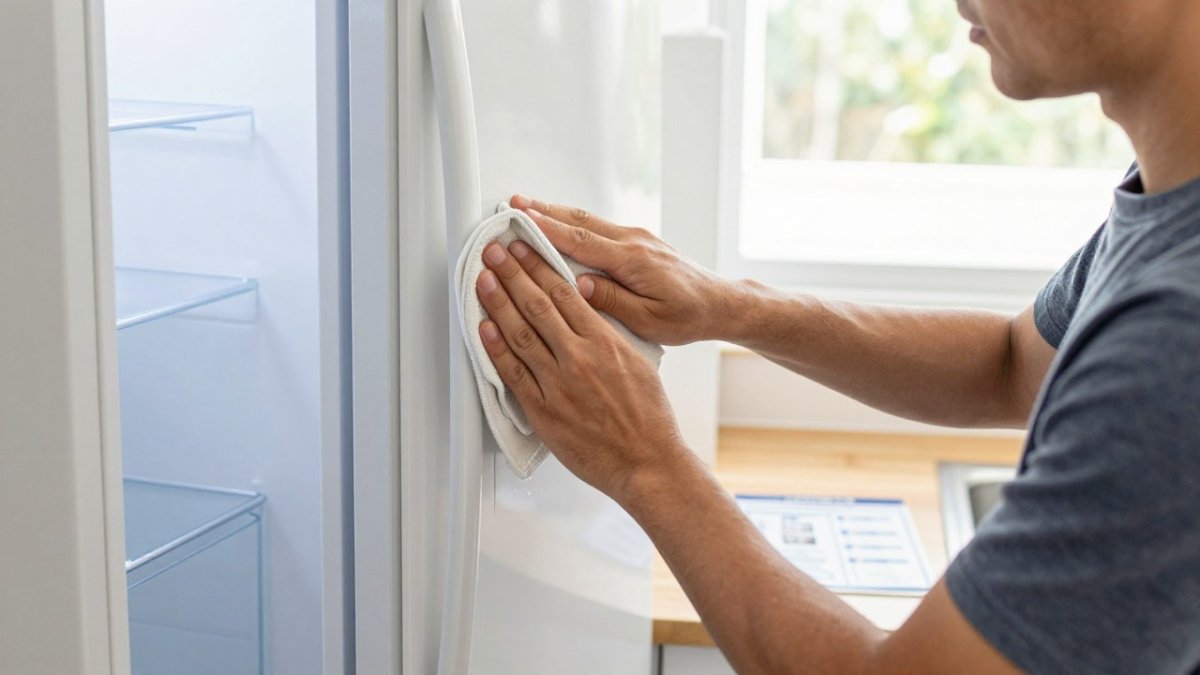
- Wipe up spills in the fridge immediately so they do not set or drip into door seals
- Scrape large food scraps off plates before loading the dishwasher
- Leave the washing machine door and detergent drawer ajar after each wash so moisture can escape
- Wipe the microwave interior after any splatter while it is still soft
Weekly
- Check the fridge door seals for crumbs and wipe them with a damp cloth
- Rinse the dishwasher filter under running water if you run the machine most days
- Inspect the washing machine door seal for trapped lint or dark spots
- Clear the dryer lint filter before or after every load
Monthly
- Clean the dishwasher filter and spray arm holes with a soft brush
- Run an empty hot cycle in the washing machine with a cleaning product
- Vacuum or brush the condenser coils behind or below the fridge if they are accessible
- Wipe down the stove top and check burner caps or elements for residue
- Run the self-clean cycle on the oven only if the manual recommends it, and ventilate the kitchen
Every three months
- Check the washing machine door seal for mould and trapped lint, and clean the drain pump filter
- Clear the dryer vent and check the external flap for lint build-up
- Inspect fridge door seals with the paper test and replace if they no longer grip
- Descale the kettle or coffee machine if you live in a hard-water area
Every six months
- Pull the fridge out carefully (switched off at the wall) and clean behind and underneath
- Check washing machine and dishwasher inlet hoses for bulges, cracks or damp patches
- Clean the range hood filter in hot soapy water or according to the manual
Every year
- Have a qualified technician check electrical connections, safety switches and any hard-wired appliance
- Inspect hoses and water inlet connections for cracks or leaks and replace any that look worn
- Review the manufacturer's manual for any annual service tasks you have missed
Keep a note of the dates on your fridge or in your phone. Tracking tasks makes them much easier to stick to, and it also gives a technician a useful history if something does go wrong. If you are unsure whether a task is safe for you to do, treat that as a sign to book a professional check rather than guess.
Refrigerator Coils, Door Seals and Filters
Fridge coils are one of the most overlooked parts of appliance maintenance. When dust builds up on the coils, heat cannot escape, and the compressor runs for longer. Many homeowners notice higher power bills before they realise why.
To clean the coils, switch the fridge off at the wall, pull it out carefully, and use a soft brush or vacuum to remove dust. Work slowly so you do not bend any fins.
Door seals are the next thing to check. Close the door on a sheet of paper. Before booking a repair, check these five points to confirm what the fault is.
A common mistake is cleaning the coils only once a year. Dusty coils in a busy kitchen or with pets in the house may need attention every three months.
Watch out: pulling a fridge out from the wall without switching it off first can damage the power cord and create an electrical hazard. Always unplug it before you start.
Washing Machine Maintenance Tips
Washing machines collect detergent residue, lint and mould, especially in the door seal and the drawer. Left alone, these build-ups can cause odours, poor draining and rust on the drum.
- Leave the door and detergent drawer open between washes so the inside can dry
- Run a hot cleaning cycle with a washing machine cleaner once a month
- Use the correct amount of detergent, since too much causes suds build-up
- Check the inlet hose for kinks and replace it if it bulges or cracks, and if your machine is not draining or leaking after these checks, washing machine repairs cover that fault locally in Currumbin Waters.
- Clean the drain pump filter following the owner's manual
Overloading the drum puts extra strain on the motor and bearings. Leave space for clothes to move freely during the spin.
Dishwasher Maintenance Tips to Prevent Clogs
Most dishwasher problems start with food debris. Small bits of food collect in the filter, block the spray arm holes and leave the base dirty. Once the drain is blocked, water sits in the tub and the machine may show an error code.
Clean the filter at least once a month. Remove it, rinse it under running water and use a soft brush on the mesh. Check the spray arm holes with a toothpick if water is not reaching the top rack. Scrape large food pieces off plates before loading.
If your dishwasher still drains slowly or leaves water behind, check the drain hose for kinks and make sure the sink waste is clear. For error codes, always check the manufacturer's guide before running a repair, since codes vary by brand and model.
Appliance Repair Warning Signs You Should Not Ignore
Some signs mean your appliance needs attention now, not later. The useful skill is knowing which symptoms point to a simple fix you can handle and which point to a fault that needs a licensed technician.
- Burning smells or scorch marks near plugs and switches, this usually points to overheating at a connection or a failing component. Switch the appliance off at the wall, do not use it again, and book a licensed electrician. Do not open the appliance to investigate.
- Tripped circuit breakers when the appliance runs, a breaker that trips each time the appliance starts suggests an earth leakage or short circuit. Unplug it and have it tested; repeated resetting risks damage and is a safety hazard.
- Water pooling on the floor around the machine, check whether the leak comes from a loose hose connection or a blocked drain first, since these are often homeowner-fixable. If the leak comes from inside the cabinet, switch off the water and power and call a technician.
- Loud grinding, banging or squealing, on a washing machine this often means a worn bearing, a foreign object in the drum or an unbalanced load. Stop the cycle, check for loose items, and if the noise returns with a balanced load, book a repair.
- Fridge not holding temperature or freezer frosting up, a dirty condenser coil or a worn door seal can cause this and is worth checking first. If coils and seals are clean and the temperature still drifts, the fault is likely in the thermostat or refrigerant circuit, which is technician work.
- Dishwasher leaving water in the base or showing a recurring error code, clean the filter and check the drain hose for kinks before assuming a pump failure. Error codes vary by brand and model, so check the manufacturer's guide before running any reset sequence.
- Longer cycle times or higher power bills with no change in use, this is often an early sign of a failing heating element, a clogged filter or a seal that is letting heat escape. A service call at this stage is usually cheaper than waiting for a breakdown.
What is safe to do yourself: cleaning filters, wiping seals, vacuuming accessible coils, clearing lint, checking hoses for visible damage, and resetting a tripped safety switch once. Always switch the appliance off at the wall and, where relevant, turn off the water before you start.
What should be left to a licensed technician: any work involving internal wiring, electrical connections, gas connections, refrigerant handling, or opening a sealed cabinet. Attempting these yourself can cause injury and damage the appliance.
Watch out: pulling a fridge or washing machine out from the wall without switching it off first can damage the power cord and create an electrical hazard. Unplug it before you move it, and never work on an appliance that is wet or still connected to power.
Booking Your Next Appliance Service on the Gold Coast
If your appliance is showing warning signs, or you want a professional check-up, ISB Electrical can help. Our licensed and insured technicians use genuine spare parts and back the work with a warranty. You can book a visit and request a quote through our website.
Starting with a few simple habits today is the best way to avoid an expensive breakdown later. Call ISB Electrical to arrange a service visit and keep your appliances running well for years to come.
Frequently Asked Questions
What appliance maintenance should I do regularly?
Clean the refrigerator condenser coils and door seals every three to six months, empty and clean the dishwasher filter monthly, and clear the washing machine drain filter and door seal after use. Dryers need the lint filter cleared after every load and the vent checked at least once a year. Ovens benefit from a wipe-down after each use to prevent baked-on grease. Following the owner's manual for your specific model is the safest guide, since recommended intervals vary by brand and usage.
How often should I clean my washing machine filter?
Most front-loading machines have a drain filter that should be checked every one to three months, or sooner if you notice slow draining or a smell. Top-loaders with a filter need similar attention. Check the owner's manual for the exact location, as some models require you to drain the machine first. Clearing lint, coins and hair early reduces the risk of pump damage, which can be an expensive repair.
How do I maintain a dishwasher?
Clean the filter monthly by removing it and rinsing away food particles, and wipe the door seal to stop mould. Check the spray arms for blockages and run a hot empty cycle with a dishwasher cleaner every month or two to clear grease and limescale. Avoid overloading, scrape large food off dishes, and use the correct amount of detergent. If you have hard water, a rinse aid helps prevent residue on glassware.
Is it worth repairing an older appliance?
Often, yes. A repair is usually worth considering when the part cost is modest compared with the price of a replacement and the appliance otherwise performs well. Get a diagnosis first, because a quoted fault can be cheaper to fix than expected. If the appliance needs repeated repairs in a short period, or the cost of repair approaches the price of a comparable new unit, replacement may be the better choice. You can contact ISB Electrical through its website for more information.