
 How-to
7 Reasons Your Dishwasher Isn't Cleaning Dishes Properly
Last Updated: October 26, 2026
Quick Summary
A clogged filter is the most common cause of poor dishwasher cleaning, so twist out the cylindrical filter at the base of the tub, rinse it under warm water and scrub the mesh with a soft brush and dish soap. Clean it monthly, or fortnightly if you cook a lot of greasy food.
- Spin each spray arm by hand; if it grinds or sticks, lift it off and check the hub for grit.
- Water below about 49°C won't dissolve detergent well or cut grease, so check your hot supply.
- Face dirty surfaces toward the centre spray and keep tall items clear of the spray arm's rotation.
- Run an empty hot cycle with a cup of white vinegar on the top rack monthly to dissolve mineral buildup.
- Call a technician if water pools in the base, the wash motor hums with no spray, or an error code returns.
Table of Contents
- Start With the Filter: Dishwasher Filter Cleaning That Fixes Most Poor Cleaning
- Dishwasher Spray Arms Not Spinning? Clear the Blocked Nozzles
- Dishwasher Detergent Not Dissolving: Residue, White Film and Cloudy Dishes
- Dishwasher Not Filling With Water: Check Supply, Inlet and Water Temperature
- Loading Mistakes That Block Water Flow and Spray Pressure
- Hard Water, Mineral Buildup and Scale: When Rinse Aid and a Cleaning Cycle Help
- Drainage and Wash Motor Problems: Signs the Fault Is Beyond DIY
- When to Stop Troubleshooting and Book a Same-Day Repair
- Frequently Asked Questions
Start With the Filter: Dishwasher Filter Cleaning That Fixes Most Poor Cleaning
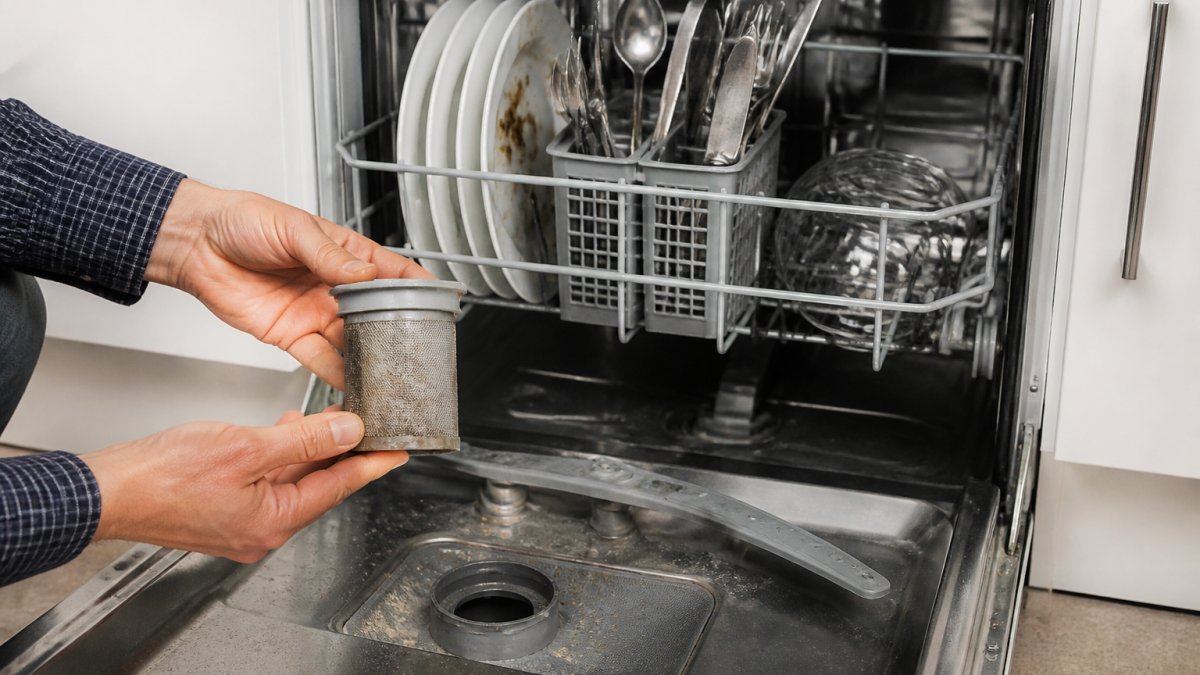
If your dishwasher isn't cleaning properly, check the filter first. A clogged filter is the most common cause of poor performance, and it takes minutes to check.
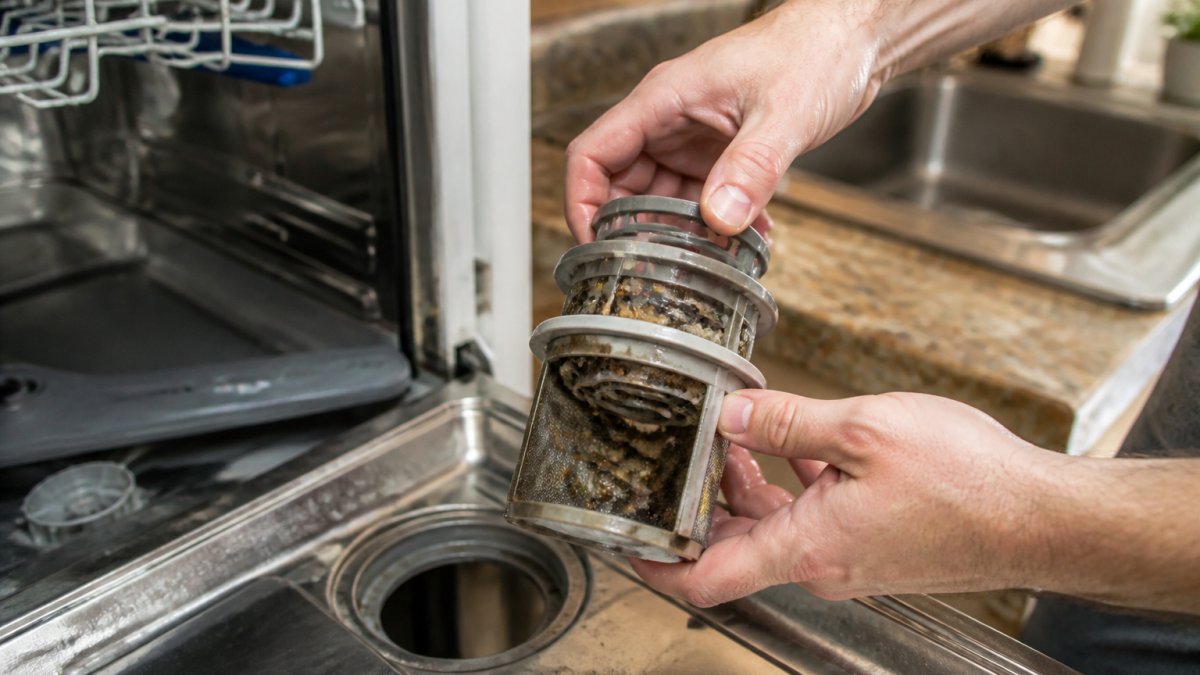
Food debris, grease and fine particles collect in the filter basket at the base of the tub, so water can't circulate freely, leaving dishes gritty and the interior smelly.
How to clean the filter properly:
- Pull out the lower basket so you can reach the base.
- Twist and lift the cylindrical filter out of its housing.
- Rinse it under warm running water.
- Scrub the mesh with a soft brush and a drop of dish soap.
- Check the flat filter plate underneath for trapped food particles.
- Lock everything back into place before you run a cycle.
Do this monthly, or fortnightly if you cook a lot of greasy food. A clean filter restores water flow and spray pressure almost immediately.
Watch out: never refit the filter loosely.
Cleaning the filter is a quick job that restores water flow and spray pressure, so here is the process at a glance. For a real case where clearing the diverter valve and spray arms restored washing performance, see this Fisher & Paykel dishwasher not cleaning dishes in Upper Coomera case study.
| Step | What to do |
|---|---|
| 1 | Pull out the lower basket to reach the base |
| 2 | Twist and lift the cylindrical filter out |
| 3 | Rinse under warm running water |
| 4 | Scrub the mesh with a soft brush and dish soap |
| 5 | Check the flat filter plate for trapped food |
| 6 | Lock everything back into place before a cycle |
Dishwasher Spray Arms Not Spinning? Clear the Blocked Nozzles
Spin each arm by hand; it should turn freely.
Hold the arm up to a light and inspect the nozzle holes, which food particles and scale constantly block.
Quick checks before you pull anything apart:
- Remove the spray arm and rinse it under the tap.
- Soak it in warm water with a splash of vinegar to loosen mineral buildup.
- Clear every nozzle hole, not just the obvious ones.
Reassemble and run a short cycle. You should hear the spray pattern change and see better coverage.
What most guides miss is the arm's end cap. On many models it unscrews, and debris collects inside the arm itself.
Dishwasher Detergent Not Dissolving: Residue, White Film and Cloudy Dishes
Detergent left in the dispenser or coating your glasses points to a wash problem, not a detergent problem.
White film on dishes, especially plastic, is often detergent residue or hard water scale; dishes that stay cloudy after drying usually mean mineral buildup.
Fix the detergent issue in four steps:
- Fill the dispenser to the marked line, not above it.
- Use a detergent suited to your water hardness. Hard water needs a stronger formula.
- Run a hot cycle of at least 60°C for greasy loads.
A common mistake is pre-rinsing everything. Modern detergent needs food soil to work against, so scrape, don't rinse.
If residue keeps appearing, run an empty hot cycle with a dishwasher cleaning product to strip detergent residue and grease from the interior.
Diagnose by symptom before you change detergent
Most guides tell you to switch detergent and hope.
White, chalky film on glasses and plastic: usually detergent residue or hard-water scale.
Gritty specks or food particles on dishes: this is a filtration or spray problem, not a detergent problem.
Greasy, smeary glasses and a greasy tub: this points to wash-water temperature or an overloaded load.
Cloudy glass that stays cloudy after drying: this is etched or scaled glass, usually permanent once developed.
Check the dose against your water, not the packet
Detergent dose is not one-size-fits-all. Soft water needs less detergent; hard water needs more, or a formula built for hard water.
Also match detergent type to cycle. Powder dissolves best in longer hot cycles; tablets need enough water and heat; gel suits short cycles but struggles with baked-on grease.
If residue keeps appearing after you have corrected dose, temperature and rinse aid, run an empty hot cycle with a dishwasher cleaning product, then reassess.
Dishwasher Not Filling With Water: Check Supply, Inlet and Water Temperature
A dishwasher that isn't filling won't clean anything. Before you call anyone, check the water supply, the inlet and the water temperature.
First, confirm the tap under the sink that feeds the dishwasher is fully open.
Second, inspect the inlet hose and filter screen where it connects. A blocked inlet screen starves the wash cycle of water.
Third, check water temperature.
Signs the fill is the problem:
- Dishes are warm but still dirty.
- The detergent tablet is half-dissolved.
- You hear the wash motor running but no splashing.
Loading Mistakes That Block Water Flow and Spray Pressure
Poor dish loading blocks the spray path and ruins cleaning performance. It's the cheapest fault to fix and the most overlooked.
Water needs to reach every surface. Overcrowding stops that. So does nesting bowls and stacking cups face-up so they fill with water.
Load like this instead:
- Face dirty surfaces toward the centre spray.
- Keep large items at the sides and back, never in front of the spray arm.
- Don't let tall items block the spray arm's rotation.
Watch out: a single tall platter leaning across the lower basket can stop the spray arm dead.
Hard Water, Mineral Buildup and Scale: When Rinse Aid and a Cleaning Cycle Help
Hard water leaves scale on heating elements, spray arms and dishes, reducing spray pressure and cleaning performance even when everything else is fine.
Two tools handle most of it: rinse aid and a regular cleaning cycle.
Rinse aid helps water sheet off dishes so scale and residue don't dry on.
A monthly cleaning cycle strips scale from the interior.
Signs hard water is your issue:
- White film on glasses and plastic dishes.
- Chalky deposits around the door seal.
- Cloudy dishes that don't clear after washing.
If scale is heavy, a technician may need to descale the wash motor and heater. Left long enough, scale damages components.
Clean the parts scale actually attacks, in the right order
Scale does not settle evenly. It builds first on the heating element, then spray-arm nozzles and filter mesh, then the door seal and tub walls. Cleaning in that order gives the biggest improvement per cycle.
Before you start: check your appliance manual for the manufacturer's approved cleaning method and any parts that must not be immersed or soaked. Some spray arms and filter assemblies are not designed for vinegar soaks, and some finishes are damaged by acidic cleaners.
- Filter first. Remove the filter basket and mesh, rinse under warm water, and scrub with a soft brush. Scale on the mesh reduces flow before anything else does.
- Spray-arm nozzles second. Remove the arms where the manual allows, hold them to a light, and clear every hole with a toothpick or straightened paper clip. Soak only if the manual permits; otherwise flush under the tap.
- Heating element and tub third. Run an empty hot cycle with a dedicated dishwasher cleaner, following the dose on the pack. Vinegar in a cup on the top rack is a common home alternative, but check the manual first and never mix vinegar with a chlorine-based cleaner.
- Door seal and edges last. Wipe the seal with a damp cloth; chalky deposits there cause leaks and odour, not cleaning faults, but they signal the scale level in the appliance.
Know when scale has moved beyond a cleaning cycle
A cleaning cycle handles surface scale. It does not fix scale bonded to the heating element or blocking the wash pump impeller. Escalate to a technician if:
- Dishes are still gritty or filmed after a filter clean and a full cleaning cycle.
- The appliance takes longer to heat, or the wash water feels only warm after a hot cycle.
- Spray pressure stays weak after every nozzle has been cleared.
These signs point to heating, circulation or pump faults behind panels that connect to mains power and water. A licensed technician can test the element, check the pump and descale components that cannot be reached from the tub.
Prevention schedule that actually holds scale back
Scale returns at the rate your water supplies it, so prevention is a rhythm, not a one-off. A workable schedule for a hard-water household:
- Every load: rinse aid topped up, correct detergent dose for your hardness.
- Monthly: filter clean and an empty hot cleaning cycle.
- Quarterly: remove and inspect spray arms, clear every nozzle, and wipe the door seal.
If you have a water softener or a whole-house filter, adjust the schedule down; softened water scales far more slowly. If you do not, treat the monthly cycle as the minimum, not the target.
Drainage and Wash Motor Problems: Signs the Fault Is Beyond DIY
Some faults need a technician, and drainage and wash motor problems are the main ones.
Call a technician if you notice:
- Standing water in the dishwasher interior after a cycle.
- A humming wash motor with no spray.
- Water leaking from under the door.
The drain hose, drain motor and wash motor sit behind panels and connect to mains power and water. Faults here are not a DIY job.
Ignoring drainage problems can flood the base and damage the control board. That turns a small repair into an expensive one.
When to Stop Troubleshooting and Book a Same-Day Repair
Stop troubleshooting when you've cleaned the filter, cleared the spray arms, checked the supply and temperature, and the dishwasher still won't clean.
ISB Electrical is a family-owned Gold Coast business led by a qualified Electrical Engineer with over 30 years of experience.
If you've worked through the steps above and the problem persists, book a technician rather than keep guessing. You can also go straight to dishwasher repairs in Mermaid Waters for same-day service. You can also go straight to dishwasher repairs in Burleigh Waters for same-day service. You can also go straight to dishwasher repairs in Biggera Waters for same-day service. You can also go straight to dishwasher repairs in Clear Island Waters for same-day service.
For guidance on how dishwashers should perform, Choice's dishwasher buying and care guide is a useful independent reference.
Frequently Asked Questions
Why is my dishwasher all of a sudden not cleaning well?
A sudden drop in dishwasher cleaning performance usually points to a clogged filter, blocked spray arm nozzles, or food debris and mineral buildup inside the machine. Start by removing and rinsing the filter, then inspect the spray arms for blocked holes. Check that dishes are loaded without blocking the spray path and that the detergent dispenser opens freely. If those checks come up clear, examine water temperature and inlet flow before assuming the wash motor has failed.
How do I clean a dishwasher filter and spray arms safely?
Switch off the dishwasher at the power point first. Twist out the filter basket from the base, rinse it under warm running water and scrub gently with a soft brush and a little dishwashing liquid. For spray arms, unclip them where your model allows, then use a toothpick or soft brush to clear blocked nozzles and rinse them through. Never use metal tools or harsh abrasives on plastic parts. Check your model's manual before removing components, as some arms are not user-removable.
Can overloading a dishwasher stop it from cleaning properly?
Yes. Overloading blocks the spray path so water cannot reach every surface, and it also stops the detergent dispenser lid from opening fully. Leave gaps between plates and bowls, keep large items away from the spray arms, and avoid nesting items inside each other. Load pots and pans face-down or angled so water drains, and never let tall items block the rotating arms. A loosely loaded rack consistently outperforms a packed one.
When should I call an appliance repair technician?
Call a technician if the dishwasher is not filling with water despite the tap and inlet hose being clear, if the wash motor is noisy or silent during a cycle, if water pools in the base and will not drain, or if error codes persist after a reset. Electrical faults, drain motor failures and control board issues need a licensed technician. Book a same-day visit rather than continuing to run cycles that may cause further damage.
A dishwasher that won't clean properly usually comes down to a blocked filter, a clogged spray arm, or a drainage fault. Fix the simple things first, then call in help.
Get started with ISB Electrical and get your dishwasher cleaning dishes properly again. Call us now for same-day service, genuine spare parts and a repair backed by a warranty.