 How-to
Stove Burner Not Working? Check These 6 Things First
Quick Summary
A stove burner that will not work usually has a simple cause, such as a blown fuse, a dirty igniter, a blocked gas port or a faulty switch, rather than a failed appliance. Start with safe checks, then book a stove repair if the fault remains.
- Check the wall switch and circuit breaker first, and confirm the control knob is turned to the correct setting.
- Clean the burner cap and ports with a dry brush, since this can restore ignition on many gas burners.
- Never open a sealed panel or remove a cover on a gas appliance yourself.
- Gas work must be carried out by a licensed gas fitter, and electrical work by a qualified technician.
- Ask for a written quote that separates the diagnostic charge, parts and labour before approving any work.
Table of Contents
- Why Your Stove Stopped Working and What It Usually Means
- Safe Checks to Do Before You Book a Stove Repair
- Stove Burner Not Working: Likely Causes on Gas and Electric Models
- Electric Stove Repair: Faults in Elements, Switches and Controls
- Gas Stove Repair: Ignition, Burner Caps and Gas Supply
- How Much Does Stove Repair Cost and What Affects the Price
- What to Expect From a Stove Repair Visit and How to Book Yours
- Frequently Asked Questions
Why Your Stove Stopped Working and What It Usually Means
A stove burner that will not light or heat is one of the most common kitchen problems on the Gold Coast, and it is rarely a sign that the whole appliance has failed. Last Updated: November 15, 2026
Most burner faults come down to a small number of causes: a blown fuse or tripped circuit, a faulty switch or thermostat, a clogged gas port, or a worn ignition component. Knowing which group the fault belongs to saves time and helps you decide whether a quick check is enough or a stove repair service is needed.
At ISB Electrical, our technicians see these faults every week across electric and gas models. We find that a short, methodical check often narrows the problem down before anyone picks up a tool.
Sticking with the symptom is the best way to start. A burner that is completely dead points to a different cause than one that heats slowly or only on one setting. A burner that clicks but will not ignite points to the gas supply or igniter. Matching the symptom to the likely cause is the first step toward a fast, accurate repair.
Safe Checks to Do Before You Book a Stove Repair
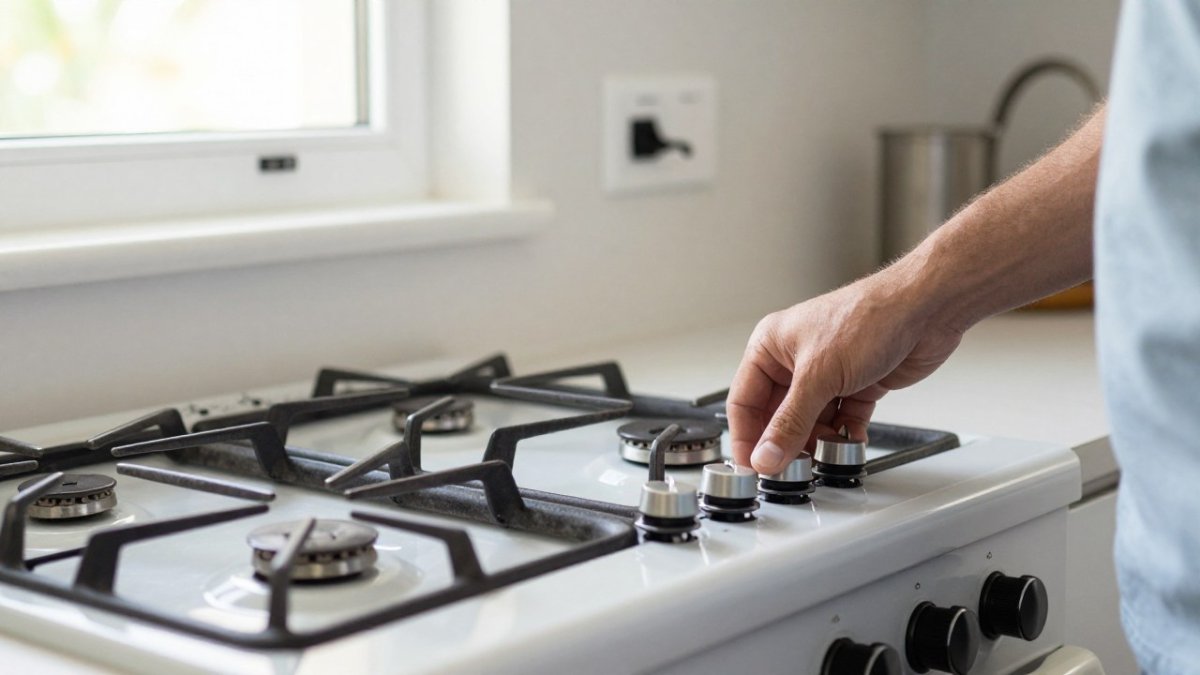
Some checks are safe for any homeowner to carry out, and they can rule out simple faults in a few minutes. Always switch the stove off at the wall or at the circuit breaker before you touch any internal part, and never open a sealed panel or remove a cover on a gas appliance.
Start with these basic steps:
- Confirm the stove is switched on at the wall and the circuit breaker has not tripped.
- Check that the control knob is turned to the correct setting and is not stuck.
- Look for a clear, dry burner head and cap on gas models, free of food debris.
- Make sure the gas supply valve to the appliance is fully open.
- Test another burner or the oven to see whether the fault affects the whole appliance.
Watch out: if you smell gas, leave the room, open a window, and do not operate any switch. Call your gas supplier or emergency services from outside the home.
Once these checks are done, you will have a much clearer picture of what the technician needs to see. That information makes the service visit quicker and helps avoid unnecessary parts being ordered.
!Homeowner checking the knobs and burner on a freestanding gas stove in a bright Australian kitchen with the power switched off
Stove Burner Not Working: Likely Causes on Gas and Electric Models
The cause of a dead burner depends heavily on whether the stove runs on gas or electricity. On a gas model, the most common causes are a blocked burner port, a worn or dirty igniter, a misaligned burner cap, or a gas supply problem. On an electric model, the usual suspects are a failed element, a faulty switch or infinite control, or a loose electrical connection.
Gas burners that click without lighting often have a dirty igniter or a burner cap that is not seated correctly. Cleaning the cap and ports with a dry brush can restore ignition in many cases. A burner that lights but produces a weak yellow flame usually points to a partially blocked port or an air supply issue.
Electric burners behave differently. A ring that stays cold while the rest of the cooktop works often has a failed element or a broken connection at the terminal. A ring that heats only on one setting usually indicates a faulty switch or control.
A common mistake is replacing a control or igniter before checking for a simple blockage or loose connection. A few minutes of inspection can prevent an unnecessary parts order.
Electric Stove Repair: Faults in Elements, Switches and Controls
Electric cooktops and ovens rely on heating elements, switches, thermostats and simmerstats to deliver steady heat. When one of these parts fails, the burner may not heat at all, heat unevenly, or run only at full power.
Heating elements wear out over time. A visible break, blistering, or a dark patch on the element often means it needs replacing. Thermostats and simmerstats control the temperature and can fail gradually, which leads to burners that overheat or never reach the set heat.
Switches and infinite controls are another frequent cause. A worn switch may cause a burner to work on some settings and fail on others. Because these parts sit behind the control panel, they should be inspected and replaced by a qualified technician. Electrical work on the appliance should not be attempted by a homeowner (Electrical workers).
If you are dealing with element, thermostat or simmerstat faults, a local electric oven and cooktop repair service can diagnose the exact part at fault. Oven and cooktop repairs in Tamborine cover elements, switches, controls and electrical faults on electric models.
Gas Stove Repair: Ignition, Burner Caps and Gas Supply
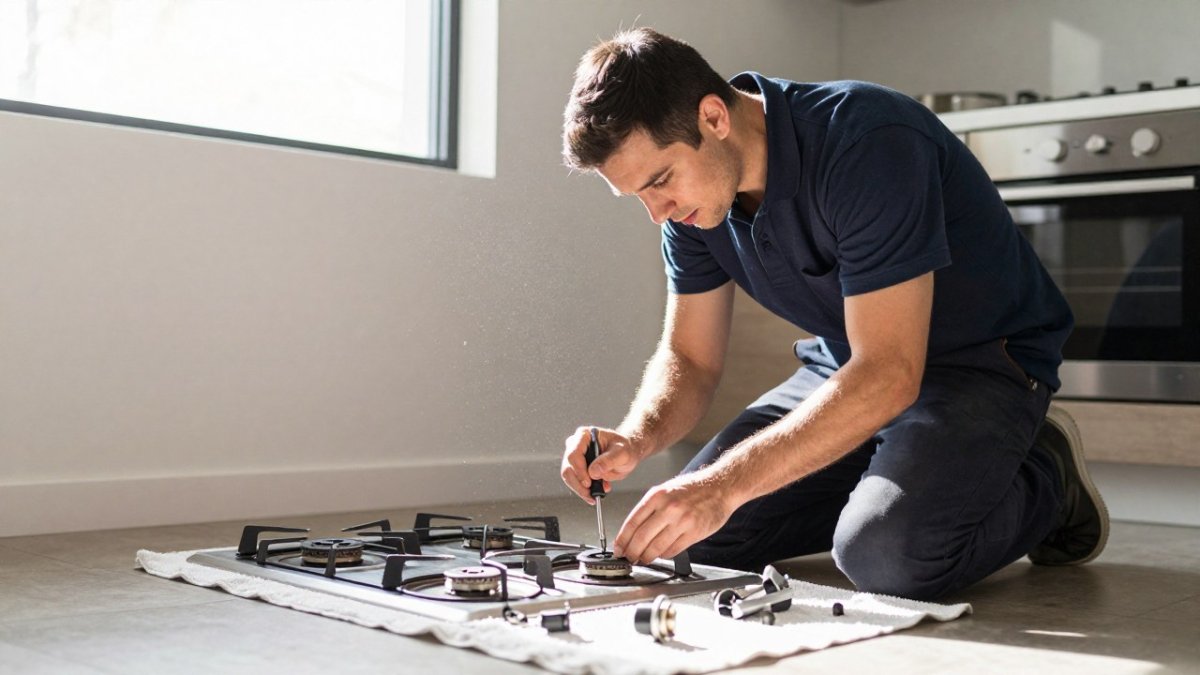
Gas stove repairs focus on three areas: ignition, burner caps and the gas supply. Most gas burner problems can be traced to one of these, and the fix is often straightforward once the cause is found.
The igniter produces the spark that lights the gas. A weak or dirty igniter may click without producing a spark, or the spark may be too faint to light the gas. Keeping the electrode clean and dry usually helps, but a worn igniter needs replacing.
Burner caps and heads must sit flat and centred. A cap that is out of place can block the flame path and stop the burner lighting evenly. Clean caps regularly, and make sure they are dry before refitting.
Gas supply problems are less common but more serious. A closed or partially closed supply valve, a restricted gas line, or low supply pressure can all stop a burner working.
Our experienced technicians can inspect the ignition system, burner caps and supply connections in one visit, which avoids repeated call-outs for the same fault.
How Much Does Stove Repair Cost and What Affects the Price
Most stove repair quotes are built from three components: a call-out or attendance fee, a diagnostic charge, and then parts plus labour once the fault is confirmed. Understanding how each component works helps you compare quotes fairly and avoid surprises.
A typical call-out fee covers travel to your home and the first portion of inspection time. Some providers waive or credit this fee against the repair if you proceed; others charge it separately.
Parts and labour are the variable portion. Common parts such as a spark igniter, burner cap, element, or infinite switch are usually modest in cost, while a simmerstat, thermostat, or control board can be more expensive depending on the model.
A common pattern is that the final invoice lands somewhere between the cost of a modest standalone appliance and a significant fraction of a new mid-range stove, depending on the part.
Before approving work, ask for a written quote that separates the diagnostic charge, parts, and labour, and confirm whether the quote is fixed or an estimate.
The table below sets out the cost components the article describes, so you can compare quotes on the same basis.
| Cost component | What it covers | Note |
|---|---|---|
| Call-out fee | Travel and first part of inspection | May be waived or credited if you proceed |
| Diagnostic charge | Time to isolate the fault | Ask whether it is included in the final price |
| Parts | Igniter, burner cap, element, switch, control | Modest for common parts; higher for simmerstats or control boards |
| Labour | Repair time | Depends on access and whether gas work is needed |
| Replacement check | Repair versus new appliance | Consider if repair nears half the cost of a new unit on an older stove |
What to Expect From a Stove Repair Visit and How to Book Yours
A well-run stove repair visit follows a predictable sequence, and knowing it helps you judge whether a provider is thorough or rushing. The technician should start by confirming the symptoms you have noticed and any checks you have already done, then inspect the burner, controls, and connections before quoting.
After diagnosis, expect a clear explanation of the fault and a written quote that separates parts and labour. You should approve the quote before work begins. Once repaired, the technician should test every burner setting, not just the one that failed, and confirm the appliance is safe to use before leaving. Ask for the old part back if you want to see what failed; a reputable provider will not object.
When comparing providers, use a short checklist rather than the headline call-out fee alone:
- Licensing: Confirm the technician holds the relevant electrical licence for electric appliances and that gas work is performed by a licensed gas fitter.
- Insurance: Ask whether the business carries public liability insurance, this matters if damage occurs in your home.
- Written estimates: Prefer providers who give a written quote before work, with parts and labour itemised.
- Parts availability: Ask whether they carry common parts on the van or need to order, and how that affects timing.
- Workmanship warranty: Confirm what warranty applies to the repair itself, separate from any manufacturer part warranty.
- Same-day options: If your stove is your main cooking appliance, ask whether same-day or next-day attendance is available and whether that affects the fee.
To book, have your appliance make and model ready, describe the symptoms precisely (for example, 'front-left gas burner clicks but will not light' rather than 'stove broken'), and state whether the stove is gas or electric. Mention any access issues such as a tight benchtop cut-out or a stove isolator that is hard to reach.
Frequently Asked Questions
Why has my stove stopped working?
The most common causes are a tripped circuit breaker, a blown fuse, a faulty power outlet or a failed element or switch on electric models. On gas stoves, a blocked burner port, a dirty ignition electrode or a wet or misaligned burner cap usually stops the flame. Start by confirming the stove is switched on at the wall and that other appliances on the same circuit have power. If nothing obvious is wrong, a stove repair technician can run a proper fault diagnosis. Avoid opening panels or testing live wiring yourself.
Is it safe to use a stove with a faulty burner?
Using a stove with a faulty burner is not recommended. A gas burner that does not light can release unburnt gas into the kitchen, which creates a risk of gas leaks and fire. An electric element that sparks, smells of burning or heats unevenly can overheat wiring or the switch. Turn off the stove at the wall and avoid using that burner until a qualified technician has inspected it. Smelling gas requires you to leave the area and contact your gas distributor or emergency services.
Can a stove be repaired, or should it be replaced?
Many stove faults are inexpensive to fix, including burner caps, igniters, elements, switches and thermostats. Whether repair makes sense depends on the age of the stove, how many parts have failed, and whether genuine replacement parts are still available for the model. If the oven cavity is badly damaged or repairs would cost close to the price of a new unit, replacement may be the better choice. For current prices, contact ISB Electrical directly.
What should I check before booking a stove repair?
Before you book, note the brand, model number and the exact symptom, such as a burner that clicks but does not light or an element that stays cold. Check whether the problem affects all burners or just one, and whether the oven and cooktop both work. Confirm the stove is turned off and cool before any inspection, and look for a tripped breaker. Having this information ready helps the technician diagnose the fault faster on the first visit.