 How-to
Washing Machine Repairs on the Gold Coast: What to Expect
Quick Summary
Washing machine repairs on the Gold Coast typically start with a diagnosis of the fault, then an itemised quote covering call-out, diagnostic, parts and labour before any work begins. Most common faults, such as a blocked drain filter, an uneven load or a perished door seal, can be checked safely at home first.
- Check the drain filter and drain hose first when water stays in the drum.
- Ask whether the diagnostic fee is credited against the repair cost if you proceed.
- Get an itemised quote in writing before authorising any work.
- Switch the machine off at the wall and call a technician if you smell burning or see sparks.
- Replacement becomes worth considering when repair costs approach the price of a new machine.
Table of Contents
- Common Washing Machine Faults and What They Mean
- Safe Checks to Try Before Booking a Repair
- Washing Machine Repair Cost: What Affects the Price
- Washing Machine Not Draining Repair: Causes and Fixes
- Washing Machine Repair or Replacement: How to Decide
- Washing Machine Maintenance Tips to Avoid Repeat Breakdowns
- Booking a Same-Day Washing Machine Repair with ISB Electrical
- Frequently Asked Questions
Common Washing Machine Faults and What They Mean
A washing machine that stops mid-cycle, shakes violently or leaves water in the drum is usually signalling one of a few common faults that most washing machine repairs address. The table below maps each symptom to its likely cause and to the decision it implies, a safe check you can do, or a technician job.
Machine not draining
Water sitting in the drum at the end of a cycle points to the drain path: filter, hose, pump or, less often, the pressure switch that tells the machine the drum is empty. Blockages from coins, socks, bra wires and lint are common, especially in front-loaders. A failing pump motor or a jammed impeller will hum without clearing water. Check the drain filter first, then the hose for kinks where it meets the standpipe. If the filter and hose are clear and the pump hums without draining, the pump is the likely culprit and needs replacement.
Out-of-balance and noisy spin cycles
A loud thump or rattle during spin usually means an uneven load, an unlevel machine, or worn drum bearings or suspension. Many machines detect imbalance and stop with a warning. Redistributing the load and levelling the feet solves most cases. Persistent banging or grinding that continues with a balanced load suggests worn bearings, shock absorbers or suspension springs, a technician job, because accessing them usually means partial dismantling.
Water leaks
Leaks usually come from a cracked or perished door seal, a loose hose connection, a faulty inlet valve, or a blocked detergent drawer overflowing. Trace the leak with the machine off: a leak only during fill points to the inlet side; a leak during drain points to the pump, hose or seal. A door-seal leak often shows as water at the front bottom corner.
Error codes
Most machines display an error code when a fault is detected, and the code is the quickest way to identify the problem. Your owner's manual lists what each code means for your model. Note the code before you call, it speeds up diagnosis and can tell the technician which parts to bring. Codes that recur after a reset, or that relate to motor, heater or communication faults, should not be ignored.
Failure to spin
A machine that drains but will not spin often has a lid or door switch fault, a worn drive belt, a failed motor capacitor, or a load-balance issue. If the drum turns freely by hand but does not spin under power, the fault is usually electrical or in the drive system rather than a blockage.
When to stop checking and book a technician
Sparks, burning smells, water near electrical parts, or a machine that trips the safety switch are signs to switch off at the wall and call straight away. Do not open internal panels, bypass a door switch, or run a machine with standing water to test it, repeated cycles on a blocked pump can strain the motor and cause further damage.
The table below maps common washing machine symptoms to their likely causes and the next step to take.
| Symptom | Likely cause | Next step |
|---|---|---|
| Water left in drum | Blocked filter, hose or pump | Clear filter and hose; replace pump if it hums |
| Loud thump or rattle on spin | Uneven load or unlevel machine | Rebalance load and level feet |
| Banging or grinding with balanced load | Worn bearings or suspension | Technician job |
| Water at front bottom corner | Cracked or perished door seal | Inspect and replace seal |
| Leak only during fill | Inlet side fault | Check inlet valve and hose connections |
| Drains but will not spin | Lid or door switch, belt or capacitor | Electrical or drive-system check |
| Sparks or burning smell | Electrical fault | Switch off at wall and call straight away |
Safe Checks to Try Before Booking a Repair
Some faults can be checked safely without tools. Always switch the machine off at the wall and unplug it before opening any panels or filters.
- Confirm the power point works with another appliance.
- Check the water tap is fully open and the inlet hose is not kinked.
- Clean the drain filter, removing any debris, and check the drain hose for blockages.
- Level the machine and remove any excess load that could cause imbalance.
- Look at the door seal for trapped items or residue.
If these checks do not solve the problem, or the machine shows a recurring error code, book a licensed technician rather than opening the internal components yourself. Sparks, burning smells or water near electrical parts are signs to switch off and call straight away.
Washing Machine Repair Cost: What Affects the Price
Repair pricing is not one number. It is built from a few components, and understanding them helps you compare quotes fairly and avoid surprises. For current prices for your machine, request an itemised quote from ISB Electrical.
What makes up a repair quote
- Call-out or attendance fee, covers travel to your property. Ask whether it applies before booking.
- Diagnostic fee, the time to identify the fault. Ask whether it is credited against the repair cost if you go ahead.
- Parts, the largest variable. A drain pump or door seal is modest; a control board, drum bearing set or motor can be a significant share of the quote.
- Labour, based on the job's complexity and expected duration. Front-loaders with sealed drums and integrated electronics typically take longer to access than top-loaders.
- Access and location, a machine in a tight laundry cupboard, upstairs, or behind cabinetry takes more time to move and test.
Why fixed prices are rare
A repairer cannot know whether the fault is a blocked filter or a failed control board until the machine is inspected. A better approach is a clear diagnostic fee, an itemised quote after inspection, and your approval before work starts.
How to compare quotes
Ask each provider for the same four things: the call-out fee, the diagnostic fee, whether the diagnostic fee is credited against the repair, and a written itemised quote covering parts and labour. A quote that is lower on the call-out but higher on parts is not necessarily cheaper overall. Confirm whether the quoted parts are genuine or generic, and whether the work carries a warranty.
When a repair is not worth the quote
If the quoted repair cost approaches the price of a comparable new machine, or the machine has had repeated faults, replacement deserves serious consideration. The decision framework in the next section sets out the factors to weigh.
Watch out: a quote given over the phone without any inspection is an estimate, not a price. Get the itemised figure in writing before authorising work.
Washing Machine Not Draining Repair: Causes and Fixes
A washing machine that will not drain is one of the most frequent callouts. Start with the drain filter, which traps lint, coins and small items. Clear it, then check the drain hose for kinks or blockages where it meets the standpipe.
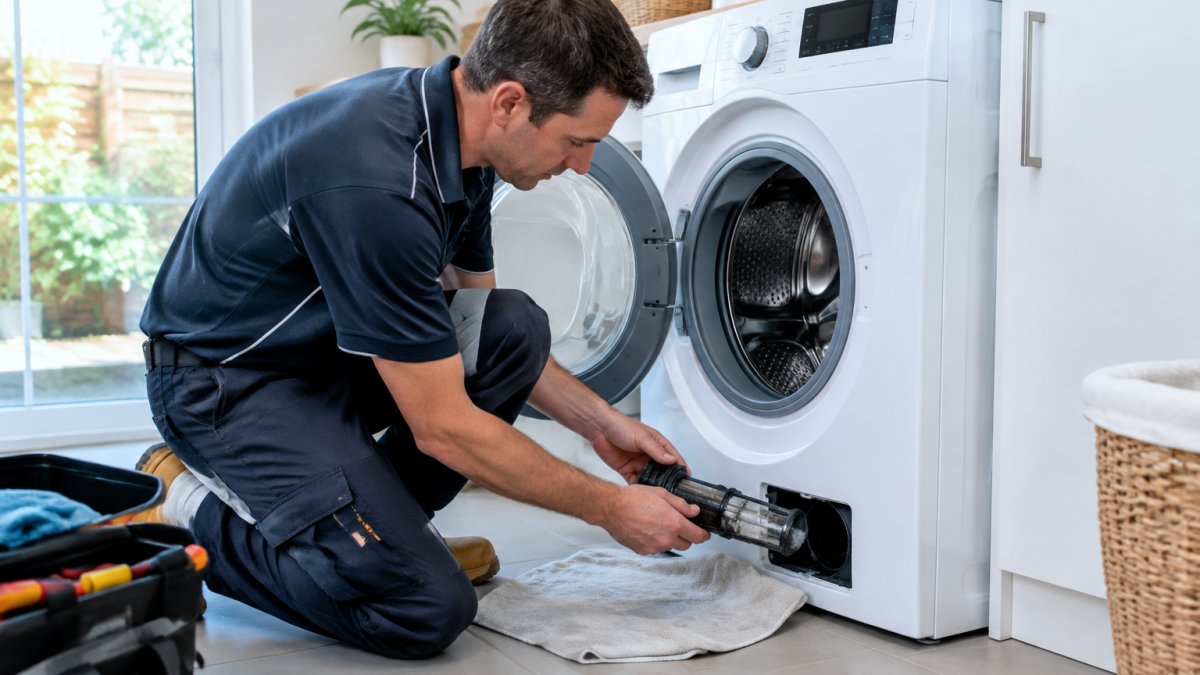
If the drain is clear and water still stays in the drum, the pump is the likely culprit. A humming sound without drainage often points to a jammed pump impeller. A technician can test the pump and replace it if needed.
Watch out: do not run a machine with standing water to test it. Repeated cycles on a blocked pump can strain the motor and cause further damage.
Washing Machine Repair or Replacement: How to Decide
Repairing is usually the better choice when the machine is relatively young and the fault is isolated, such as a pump, hose or door seal, since repairing a single part is often the more economical option. Replacement becomes worth considering when repair costs approach the price of a new machine, or when the machine has several recurring faults.
Consider the age of the machine, the cost of parts and how often it has broken down. If your machine is older, check whether it is worth repairing before you commit to a quote. A technician can give you an honest assessment, including whether a repair is sensible. A good repairer will tell you if replacement makes more sense.
Washing Machine Maintenance Tips to Avoid Repeat Breakdowns
Regular maintenance prevents many faults. Clean the drain filter every few months, wipe the door seal to remove residue and run an empty hot cycle occasionally to clear build-up. Avoid overloading the drum, and make sure the machine stands level on a firm floor.
Check the inlet hoses for cracks and replace them if they look worn. These simple habits reduce the chance of leaks, drainage problems and imbalance.
Booking a Same-Day Washing Machine Repair with ISB Electrical
If your washing machine has stopped working, ISB Electrical offers same-day service. Our team is led by a qualified Electrical Engineer with over 30 years of experience, and we use genuine spare parts backed by a warranty. To see what a same-day appointment involves, read our process overview.
To book, call us directly and describe the fault and any error code shown. The earlier you call, the better our chances of attending the same day. We look forward to getting your washing machine running properly again.
Frequently Asked Questions
How much does it cost to repair a washing machine?
Washing machine repair costs depend on the fault, the make and model, and whether the part is in stock. ISB Electrical does not publish fixed prices in this article, so the most accurate figure comes from a quote. Ask for the call-out fee, diagnostic charge and parts cost to be itemised before any work starts. Visit the ISB Electrical website or call to request a current quote for your machine.
Is it worth repairing a washing machine?
Often yes, if the machine is otherwise sound and the fault is a single component such as a pump, drain hose, door lock or water inlet valve. Repair is harder to justify when the drum, bearings or main control board have failed, or when the repair cost approaches the price of a comparable new machine. A technician can diagnose the fault and advise whether repair makes sense for your machine's age and condition.
Can a washing machine be repaired on the same day?
Many common faults can be repaired on the same day, provided the part is available. ISB Electrical offers same-day service for Gold Coast homeowners, though availability depends on booking times and parts stock. If a part must be ordered, the repair is completed once it arrives. Book as early as you can, and describe the fault and machine model when you call so the technician can bring the likely parts.
What should I check before booking a washing machine repair?
Confirm the machine is switched off at the wall and unplugged before inspecting it. Check that the drain filter is clear, the drain hose is not kinked, and the water taps are fully on. Note the make, model and any error code, and when the fault started. Clear access to the machine helps the technician work efficiently. Avoid opening sealed components or using tools on live electrical parts.