 How-to
How to Stop Your Fridge Making a Clicking Noise
Last Updated: November 4, 2026
Quick Summary
A fridge clicking noise usually comes from the compressor start relay or overload protector, not the cooling system running normally. A single click every hour or so is normal, but a click every few minutes with no cooling means the compressor is trying and failing to start, so book a licensed technician.
- A single click every hour or so followed by a hum is the compressor starting and stopping normally.
- A click every few minutes with no hum points to the start relay or overload protector.
- Cracking or popping during the defrost cycle is normal expansion and contraction, not a fault.
- Unplug the fridge and brush dust and pet hair from the condenser coils as a low-risk check.
- Never test the compressor or relay with the power on or open the sealed refrigerant system.
Table of Contents
- Why Your Fridge Makes a Clicking Noise
- Fridge Compressor Clicking Noise: Start Relay and Overload Protector
- Fridge Clicking Noise but Still Cooling: What It Means
- Fridge Clicking Noise Not Cooling: When the Compressor Is Failing
- Normal Sounds vs Faulty Sounds: Defrost, Condenser and Ice Maker Noises
- How to Troubleshoot a Noisy Fridge Safely
- Repair or Replace: Costs and DIY Limits
- Book a Licensed Fridge Repair
- Frequently Asked Questions
Why Your Fridge Makes a Clicking Noise
A fridge clicking noise is usually a switch or motor trying to start, not the cooling system running normally. The click often comes from the compressor start relay or overload protector. This guide explains what each click means and when to call a technician.
Most clicks are harmless. Some are the first sign of a failing compressor. The difference comes down to timing and temperature.
Here is what we look for first:
- Does the fridge still feel cold?
- How often does the click repeat?
- Is the sound coming from the back or the top?
A single click every hour or so is normal. A click every few minutes, with no cooling, is not.
A common mistake is ignoring repeated clicking until food spoils. By then, the fault is often worse and the repair is bigger.
Fridge Compressor Clicking Noise: Start Relay and Overload Protector
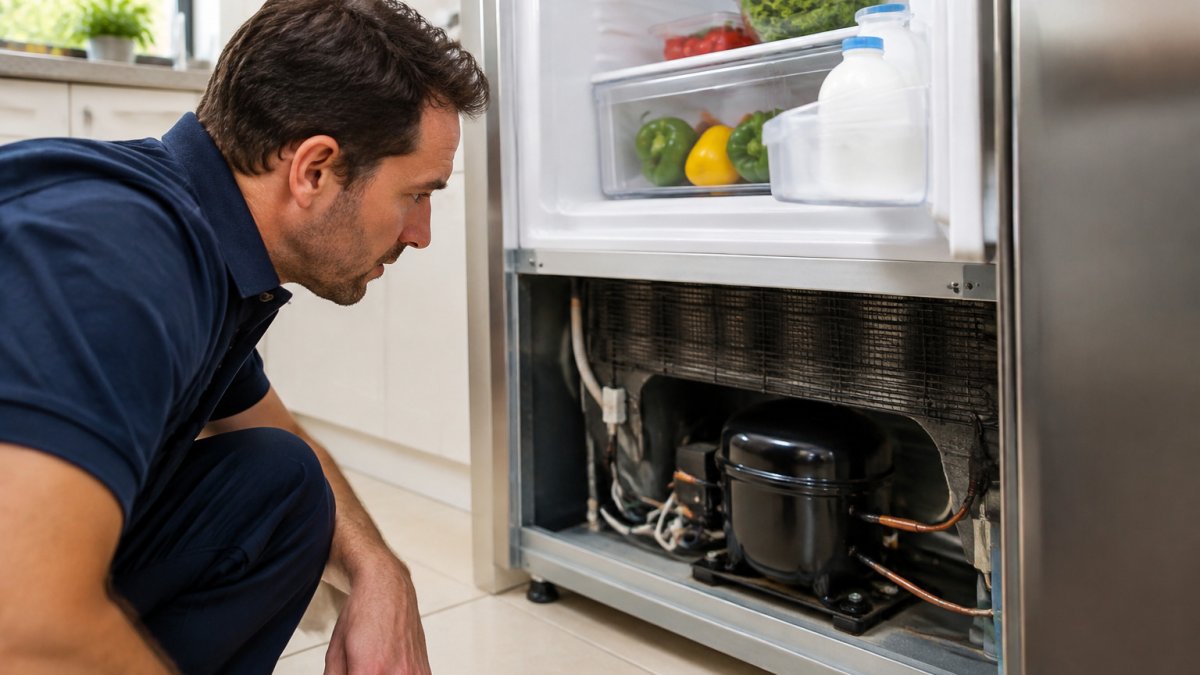
The compressor is the pump that moves refrigerant around your fridge. It needs a jolt of power to start, and two small parts control that jolt: the start relay and the overload protector. Both sit on the back of the compressor.
When the relay fails, the compressor tries to start, clicks, and gives up. Then it tries again. That is the repeated clicking sound.
The overload protector is a safety switch. If the compressor draws too much current or gets too hot, the protector cuts power. It clicks as it resets, then the cycle repeats.
Two things usually cause this:
- A worn start relay that cannot send enough current
- A seized or failing compressor that keeps tripping the protector
You cannot tell these apart by sound alone. A technician tests the relay and checks the compressor windings to find the real cause.
Fridge Clicking Noise but Still Cooling: What It Means
A fridge clicking noise but still cooling points to a part that is working, just noisily. The cooling cycle is fine, so the click is likely coming from the relay cycling on and off, or from normal expansion and contraction.
If the fridge stays cold, the risk is lower. But do not ignore it forever.
Watch for these signs:
- The click gets more frequent over weeks
- The fridge struggles to hold temperature on hot days
- The freezer stays cold but the fridge section warms
That last pattern often points to a defrost or airflow fault, not the compressor. A technician can test the defrost timer and the condenser fan to narrow it down.
Fridge Clicking Noise Not Cooling: When the Compressor Is Failing
A fridge clicking noise not cooling is the serious version. The compressor is trying to start and failing. Without a running compressor, the fridge cannot cool at all.
Signs the compressor is the problem:
- Repeated clicking every few minutes
- The fridge is warm inside
- The back of the fridge stays cool to the touch
- No hum from the compressor, only clicks
This is not a DIY fix. The compressor runs on mains voltage and holds refrigerant gas under pressure. Testing it without training is dangerous.
Move your food to an esky or a second fridge, then call a licensed technician. Fast action can help protect the food.
Normal Sounds vs Faulty Sounds: Defrost, Condenser and Ice Maker Noises
Not every sound is a fault. Fridges make a range of normal operating sounds, and knowing them saves you a service call.
Normal sounds:
- Occasional click as the compressor starts or stops
- Cracking or popping during the defrost cycle, from expansion and contraction
- Tapping or buzzing from the ice maker as it fills and drops ice
- A low hum from the condenser fan
Faulty sounds:
- Repeated clicking with no cooling
- Loud rattling from the condenser fan hitting debris
- Water dripping inside when the drain is blocked
- A grinding noise from a failing fan motor
A dirty condenser fan and blocked condenser coils can cause overheating. That can trigger the overload protector and add to the clicking. Cleaning the coils and checking airflow is a simple first step.
How to Troubleshoot a Noisy Fridge Safely
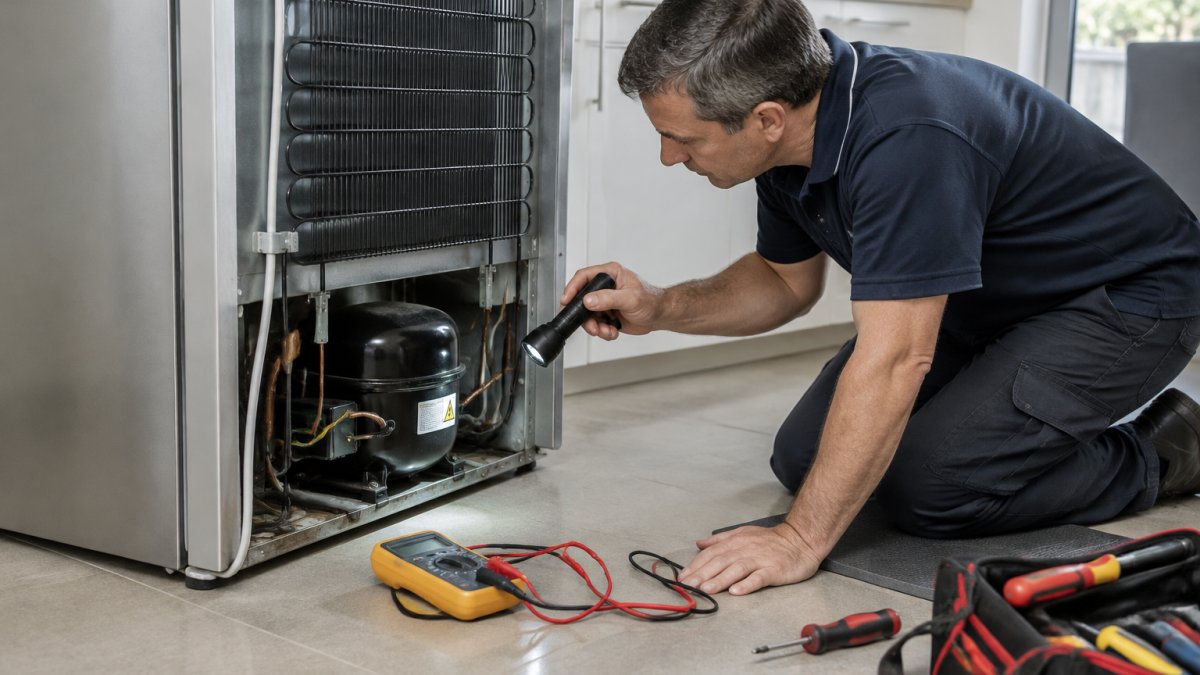
Start with the safe checks and stop where the risk begins. The aim is to separate a normal occasional click from a repeated relay click before you touch anything electrical.
Step 1: Confirm whether the fridge is still cooling. Put a thermometer in the fridge and freezer and leave it for a few hours. If both compartments hold temperature, the click is likely minor or normal. If the fridge section is warm while the freezer stays cold, suspect a defrost or airflow fault rather than the compressor.
Step 2: Time the clicks. Listen for a few minutes and note the pattern. A single click every hour or so, followed by a hum, is the compressor starting and stopping normally. A click every few minutes with no hum in between is the compressor trying and failing to start. That repeated pattern is the one that points to the start relay or overload protector.
Step 3: Locate the sound. Clicks from the back or base near the compressor point to the relay and overload protector. Cracks and pops from inside the cabinet during or after a defrost cycle are usually expansion and contraction. Tapping from the top or door area often comes from the ice maker or water valve.
Step 4: Do the low-risk checks. Unplug the fridge first, then brush dust and pet hair from the condenser coils at the back or base. Check that the condenser fan spins freely and is not blocked by debris. Inspect the door seals for gaps that make the compressor work harder.
Step 5: Check the owner's manual before going further. Click patterns and component layouts vary by refrigerator type, and some models have known relay or control board quirks. The manual will tell you where the relay sits and whether the manufacturer recommends any specific reset procedure.
Step 6: Stop at the electrical boundary. Testing the start relay with a multimeter, checking compressor windings, or opening the sealed refrigerant system are not homeowner tasks. The compressor runs on mains voltage and holds refrigerant gas under pressure. If the repeated clicking continues after the low-risk checks, book a licensed technician.
Use this quick symptom-to-cause guide to decide what to do next:
| What you observe | Likely cause | Safe next step |
|---|---|---|
| Single click every hour or so, fridge cold | Normal compressor start/stop | No action needed |
| Cracking or popping during defrost, fridge cold | Expansion and contraction | No action needed |
| Click every few minutes, fridge warm, no hum | Start relay or overload protector | Unplug and book a technician |
| Clicking plus freezer cold but fridge warm | Defrost or airflow fault | Check coils and fan, then book a technician |
| Loud rattling from the base | Condenser fan obstruction | Unplug, clear debris, check fan spins freely |
| Tapping from the top or door | Ice maker or water valve | Check the manual for the ice maker cycle |
Watch out: never test the compressor or relay with the power on, and never open the sealed refrigerant system. That work needs a licensed technician.
If cooling has stopped, move perishable food to an esky or a second fridge before you start troubleshooting. Food safety matters as much as the repair.
Repair or Replace: Costs and DIY Limits
The size of a repair depends on which part has failed. Before you commit, weigh the repair cost against the age and value of the fridge, and be clear about which checks you can safely do yourself.
DIY limits. Cleaning condenser coils, checking the condenser fan for obstructions, inspecting door seals, and noting click timing are low-risk checks most homeowners can do. Testing the start relay with a multimeter, checking compressor windings, and anything involving the sealed refrigerant system are not DIY tasks. The compressor runs on mains voltage and holds refrigerant gas under pressure, so those checks belong to a licensed technician.
What drives the cost. Pricing depends on the specific fault, the fridge model and the parts required. For a current price or a quote, contact ISB Electrical directly. Ask for a quote that separates parts and labour so you can compare like for like.
Questions to ask before you commit.
- How old is the fridge, and how does that compare with its expected service life?
- Is the fault a cheap part like a relay or fan, or is the compressor itself failing?
- Does the repair come with a warranty on parts and labour?
- Is the quote from a licensed technician who will handle refrigerant safely?
A simple decision rule. Fix a young fridge with a small fault such as a relay or fan. Replace an old fridge facing a major compressor job, especially if the repair cost approaches a significant share of a new appliance. If the fridge is still cooling and the click is occasional, monitor it and revisit the decision if the clicking becomes frequent.
At ISB Electrical, we use genuine spare parts backed by a warranty. If you want to understand why some repairs do not last, read our guide on why appliance repairs fail early.
Book a Licensed Fridge Repair
Repeated clicking with no cooling is a job for a licensed technician.
We are a family-owned business led by a qualified Electrical Engineer with over 30 years of experience. We offer same-day service and use genuine spare parts backed by a warranty.
If you are ready to stop troubleshooting, book a fridge repair in Ashmore and get your fridge cooling again.
Frequently Asked Questions
Why is my fridge making a clicking noise?
The most common cause is a failing compressor start relay. The relay sends a jolt of power to start the compressor, then clicks off. If the relay is worn, the compressor tries to start, clicks, and shuts down, then repeats. Other causes include a faulty overload protector, a defrost timer cycling, or the compressor itself failing. If the fridge is still cooling, the relay is the usual suspect. If it has stopped cooling, the compressor may need professional testing.
Is it normal for a fridge to click on and off?
An occasional click when the compressor starts or stops is normal, and most fridges do this several times an hour. The click you should not ignore is rapid, repeated clicking every few minutes, especially if the fridge is not cooling properly. That pattern points to a start relay or compressor fault rather than normal operation. If the clicking is constant and the fridge feels warm inside, switch it off at the power point and arrange a repair.
Can a clicking noise mean the fridge compressor is failing?
Yes, it can. When the compressor struggles to start, it draws high current, the overload protector trips, and you hear a click. The cycle repeats every few minutes. A licensed technician can test the start relay, overload protector and compressor windings to confirm which part is at fault. An early diagnosis matters. Do not keep resetting the power in an attempt to force it to run.
Should I unplug a fridge that is clicking?
If the fridge is clicking repeatedly and not cooling, unplug it or switch it off at the power point before doing anything else. A compressor that keeps trying and failing to start can overheat and, in rare cases, damage the windings. Unplugging also removes the electrical risk while you check the model number and owner manual. If the fridge is still cooling normally, an occasional click is not a reason to unplug it, but repeated clicking warrants a technician visit.
Stop guessing at clicks and start with a proper diagnosis. Get started with ISB Electrical and book a same-day fridge repair with genuine parts and a warranty behind them.