 how-to
How to Avoid Poor Appliance Repairs: A Practical Guide
Table of Contents
- Why Poor Appliance Repairs Cost You More Than the Repair Itself
- How to Choose an Appliance Repair Service: Key Credentials to Check
- Appliance Repair Questions to Ask Before You Book
- Evaluating a Repair Quote: What to Look For and What Raises Red Flags
- Genuine Appliance Spare Parts: Why They Matter
- Understanding Appliance Repair Warranty and Your Rights
- Verifying Quality After the Repair Is Complete
- Repair Versus Replace: Making the Right Decision
- Frequently Asked Questions
Last Updated: October 14, 2026
Why Poor Appliance Repairs Cost You More Than the Repair Itself
A bad repair doesn't fail once, it fails repeatedly, drains your wallet, and leaves you without essential appliances. Poor appliance repairs happen when technicians cut corners, use substandard parts, or lack training for your model.
The real cost extends beyond the invoice: the same problem resurfaces within weeks, you pay again, and six months later you're replacing the appliance because the damage compounds.
This guide shows you how to avoid poor appliance repairs before they happen.
How to Choose an Appliance Repair Service: Key Credentials to Check
Choosing the right technician is your first defence against poor repairs: the difference between a qualified professional and an unvetted operator often determines whether your appliance runs for years or fails within months.
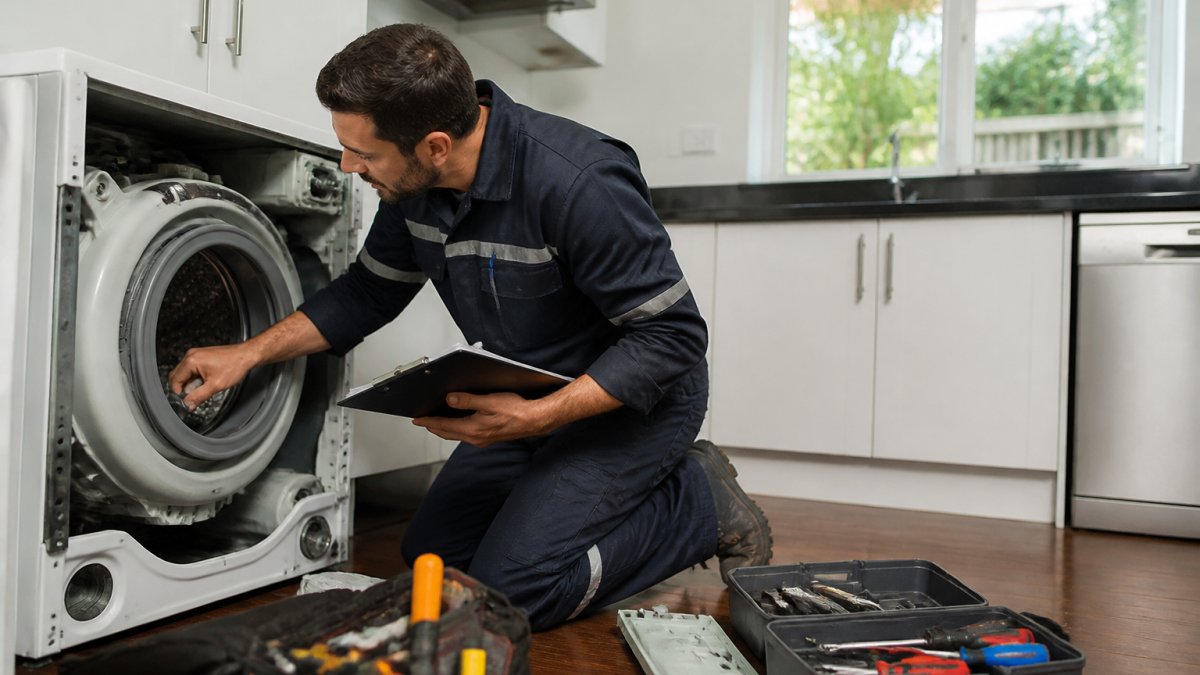
Licensing, Insurance, and Qualifications
A licensed technician has met formal training and passed competency assessments.
Insurance is equally critical: a properly insured technician carries liability cover that protects you if damage occurs, so request proof before booking.
Qualifications should match your appliance brand. A technician who has completed brand-specific training understands that manufacturer's quirks, parts, and repair protocols, meaning faster, more accurate diagnosis.
Ask these questions before you book:
- Are you licensed? In which state?
- Do you carry public liability insurance?
- Are you certified by the appliance brands you service?
Experience and Brand Specialisation
Experience matters. A technician with ten years in the field knows which problems signal deeper issues, while a newer one may fix the symptom but miss the cause.
Brand specialisation is your advantage: the technician understands design patterns, common failure points, and the right parts for your model. Ask: "How many Bosch dishwashers have you repaired this year?"
Appliance Repair Questions to Ask Before You Book
Before a technician arrives, ask the right questions. These conversations reveal whether you're dealing with a professional or someone cutting corners.
Diagnostic Fees and Upfront Transparency
Some technicians charge a diagnostic fee; others diagnose free and charge only if you proceed. Both are legitimate, but you need clarity upfront.
Ask: "Do you charge for diagnosis, and if so, how much?" Reputable services state the cost before they visit and explain whether it applies toward your repair bill.
Upfront pricing matters: before any work begins, the technician should provide a written quote detailing the fault, parts, labour, and total.
Availability and Response Times
Appliances fail at inconvenient moments, a fridge breaking on Friday evening means spoiled food by Monday. Ask what response times look like in your area.
Some services guarantee same-day appointments within a radius; others work first-come, first-served. If same-day service is essential, confirm it before booking.
Evaluating a Repair Quote: What to Look For and What Raises Red Flags
A repair quote is your roadmap: it tells you what work will be done, what parts will be used, and what you'll pay. A vague quote sets you up for surprises.
The Three Components Every Quote Should Separate
A professional quote breaks the job into three lines, each with different warranty and dispute implications:
- Diagnostic or call-out fee, the charge for attending and identifying the fault. It may be flat, waived if you proceed, or absorbed into the repair, but should be a fixed figure stated before the visit.
- Parts, itemised by name and, where possible, manufacturer part number, so you can verify the part is genuine and check the price against the maker's recommended retail.
- Labour, expressed as hours multiplied by an hourly rate, not a lump sum. A lump sum hides how long the job should take, the easiest thing to inflate.
A quote that collapses all three into one number, "Repair washing machine: $450", gives you nothing to check: you can't tell whether the part is a $20 aftermarket unit or a $200 genuine component, or whether the labour is fair or padded.
How to Benchmark a Quote Before You Approve It
You don't need trade knowledge to sanity-check a quote, just three data points:
- The maker's parts pricing. Most manufacturers publish recommended retail prices for common spare parts. If a quoted part is far above that figure, ask why; if far below, ask whether it is genuine.
- A second quote. For any repair above a few hundred dollars, a second written quote is cheap insurance. If two independent technicians disagree on the fault, get a third opinion before authorising work.
- The repair-versus-replace threshold. Compare the total quote against a comparable new appliance. As a rough guide, if the repair exceeds half the replacement price on an appliance more than halfway through its expected life, replacement usually wins.
Red Flags That Should Stop You Signing
Watch for these patterns, each a mechanism for extracting more money than the job warrants:
Vague part descriptions. If the quote says "replacement motor" without a brand, part number, or whether it is genuine, you can't verify what is being fitted, and vagueness at the quote stage usually means vagueness at the bench.
Mid-repair scope creep. A technician who starts with one agreed repair then finds "extra problems" requiring immediate approval is either diagnosing poorly or manufacturing work.
No written quote at all. Verbal agreements leave you with no evidence of what was promised. Insist on the quote in writing, email or printed, before any work begins.
Cash-only demands and no invoice. A service that won't issue a tax invoice doesn't want a paper trail, which removes your ability to claim under warranty or pursue a remedy later.
Authorisation: What You Are Actually Agreeing To
Approving a quote is not open-ended permission, you are agreeing to a defined scope at a defined price. If the job turns out larger than quoted, the technician should stop, explain the new fault, and issue a revised quote, not proceed and bill you the difference.
State this upfront: "If the cost is going to exceed the quote, I want a call before you continue." A professional agrees without hesitation; one who bristles is telling you how they handle surprises.
Genuine Appliance Spare Parts: Why They Matter
The parts used determine whether your appliance lasts months or years.
Genuine parts fit perfectly, function as designed, and carry warranties, a genuine LG fridge compressor is covered by LG if it fails.
Counterfeit parts look similar but fit loosely, wear faster, or fail under normal use.
Ask your technician: "Will you use genuine parts, and can you provide documentation?" We use only genuine spare parts, backed by warranty, so your repair lasts.
Understanding Appliance Repair Warranty and Your Rights
A warranty on repairs protects you if the problem resurfaces. Legitimate services offer warranties on parts and labour. Understand what's covered and for how long.
A typical warranty might guarantee:
- Parts: 12 months from installation date
- Labour: 30 days from completion date
Ask before booking: "What warranty do you offer on parts and labour?" A service unwilling to warranty its work is signalling low confidence in quality.
Your consumer rights also protect you.
Verifying Quality After the Repair Is Complete
Most guides stop at "test the appliance and pay the invoice", but that's where the real risk begins. A repair that works on the day can fail weeks later, when the technician has your money and the burden of proof has shifted to you. Treat post-repair verification as a formal handover.
The Handover Checklist
Before the technician leaves, work through this sequence with them present, so any issue can be corrected immediately rather than becoming a return visit.
- Run the appliance through a full operating cycle. Not a partial test, a complete cycle: a full wash including spin and drain for a washing machine, a full wash and dry for a dishwasher, a heat-up and cool-down for an oven, and several hours to reach and hold set temperature for a fridge or freezer.
- Confirm the specific fault is resolved. Check for moisture after a leak, listen through the full cycle for a noise, and verify temperature with a thermometer rather than trusting the display.
- Check adjacent functions. A repair to one component can disturb another, after a washing machine repair, check the door lock, detergent drawer, and drain hose; after a fridge repair, check door seals and any ice or water dispenser.
- Inspect the work area. Look for disturbed wiring, loose panels, cross-threaded screws, or debris left inside, sloppy reassembly predicts sloppy repair.
- Ask the technician to demonstrate the fix. A confident technician shows you the replaced part and explains what failed; reluctance to show the old part is a warning sign it may not have been replaced at all.
Documentation to Collect Before You Pay
Your warranty and any future dispute depend on paperwork. Before the technician leaves, make sure you have:
- A tax invoice showing the business name, Australian Business Number, date, itemised parts and labour, and total charged.
- The replaced part, or a photograph of it alongside the new part, as evidence the work was done.
- The part number and brand of any component fitted, to confirm it is genuine and match it against the warranty.
Store these together, if the appliance fails again, this bundle proves what was done, when, and by whom.
What to Do If the Fault Returns
First, contact the original repairer in writing, referencing the warranty and invoice. Describe the recurring fault and request an inspection under warranty, do this promptly, as delay can be used to argue the failure is unrelated.
If the repairer is unresponsive or disputes the claim, escalate in this order:
- Formal written complaint to the business, stating the fault, repair date, warranty terms, and the remedy you seek.
- Consumer protection referral. Each state and territory has a consumer affairs or fair trading body handling faulty-service disputes. Complaints are free and often prompt a response where direct contact failed.
- The Australian Competition and Consumer Commission publishes guidance on your rights under the Australian Consumer Law and can point you to the correct dispute pathway, though it does not resolve individual disputes.
- Small claims tribunal in your state or territory, for amounts within its jurisdiction, if the matter remains unresolved.
Why This Step Separates Good Repairs From Bad Ones
A poor repair often works on the day; the failure shows up later, once the technician is gone and the invoice is paid. By verifying the work at handover, documenting it, and knowing your escalation path, you close the window poor operators rely on. The technician happy to run the full cycle with you, show you the old part, and put the warranty in writing is worth calling again.
Repair Versus Replace: Making the Right Decision
Sometimes repair isn't the answer.
Consider these factors:
Age of the appliance. Most appliances last 10-15 years. A 12-year-old fridge with a failed compressor may not be worth repairing; a 3-year-old one is.
Cost of repair versus replacement. Compare the repair quote to a new appliance.
Frequency of repairs. If the same appliance has failed twice in two years, underlying issues may exist.
Parts availability. Older or obscure models may have limited spare parts.
Energy efficiency. Older appliances use more energy.
Poor appliance repairs stem from cutting corners on parts, skipping proper diagnosis, or hiring unqualified technicians.
Frequently Asked Questions
What should you ask an appliance repair technician before booking?
Ask whether they're licensed and insured, if they specialise in your appliance brand, what their diagnostic fee covers, and whether they can provide same-day service. Request an itemised quote before work begins, ask about warranty on parts and labour, and clarify what happens if the repair doesn't fix the problem. These questions help you avoid poor appliance repairs by establishing transparency upfront.
Should you use genuine appliance spare parts or aftermarket alternatives?
Genuine spare parts are manufactured to the exact specifications of your appliance and carry manufacturer backing. Aftermarket or counterfeit parts may fit initially but often fail prematurely, costing you more in repeat repairs. A reputable repair technician will always recommend genuine parts and explain why they matter for appliance lifespan and performance.
How can you tell if an appliance repair has been done properly?
Test the appliance thoroughly in the days after repair, run a full cycle for washing machines, check temperature consistency in fridges, and verify all functions work as expected. Request a written receipt detailing what was repaired, parts used, and labour performed. A quality repair should come with warranty documentation on both parts and workmanship, and the technician should explain what was wrong and how it was fixed.
When is it better to repair an appliance rather than replace it?
Repair is usually worthwhile if the appliance is less than 10 years old, the repair cost is under 50% of replacement value, and the fault is a single component failure (like a motor or seal). If the appliance is older, has repeated faults, or requires multiple expensive repairs in a short period, replacement may be more economical. A qualified technician can advise you on repair viability versus replacement based on your specific situation.