 blog
blog
Washing Machine Repair or Replace: A 2026 Guide
Table of Contents
- Washing Machine Repair or Replace: How to Decide
- The 50% Rule and Other Decision Frameworks
- What a Washing Machine Repair Cost Actually Covers
- Washing Machine Lifespan: How Long Should Yours Last?
- Signs Your Washing Machine Needs Replacing
- Common Washing Machine Problems and What They Mean
- Repair or Replace? Weighing the Trade-Offs
- Making the Call: Your Next Steps
- Frequently Asked Questions
Last Updated: October 16, 2026
Washing Machine Repair or Replace: How to Decide
The decision to repair or replace a washing machine comes down to three numbers: the repair quote, the age of the machine, and the price of a like-for-like replacement.
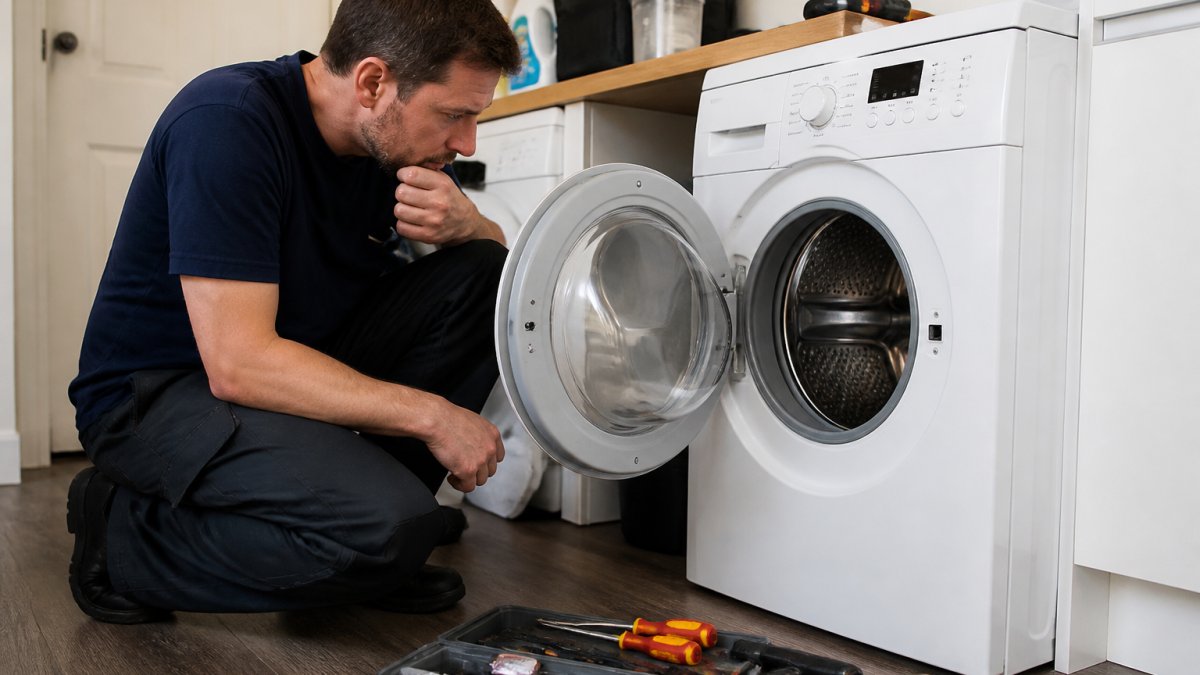
We see this call made badly all the time: homeowners sink money into a machine on its way out, or scrap a good unit over a cheap fix.
This guide walks through the frameworks, the real costs, and the fault-by-fault guidance you need to make the call with confidence.
The 50% Rule and Other Decision Frameworks
The 50% rule is the fastest filter: if a repair costs more than half the price of a new machine, replace it. An older machine needing a major repair will likely need another one soon.
But the 50% rule is a starting point, not the whole answer. Two other frameworks sharpen the decision:
- The age rule: Most washing machines last 8 to 12 years. If yours is past 10 and needs a major part, replacement usually makes more sense.
- The repeat-fault rule: If the same problem has come back within 12 months, the machine is telling you something. A second repair on the same fault rarely sticks.
The common mistake is applying only one rule. Run all three, then weigh the results.
What a Washing Machine Repair Cost Actually Covers
A washing machine repair cost has three parts: the service call, the parts, and the labour. Understanding each helps you judge whether a quote is fair.
- Service call: The fee for a technician to attend and diagnose the fault. This is often waived if you proceed with the repair.
- Parts: The replacement component. Genuine parts cost more than generic ones but last longer and carry a warranty.
- Labour: The time to fit the part, test the machine, and clean up.
A minor fix, like a blocked filter or worn drive belt, sits at the low end.
Because pricing depends on the fault, brand, and part, we quote each job after diagnosis rather than guessing over the phone.
The repair quote is only half the comparison
Most guides compare the repair quote to the sticker price of a new machine. That is misleading, because the sticker price is not what you pay. Compare full repair cost against full replacement cost.
Full repair cost includes:
- Diagnosis or call-out fee (often credited against the repair if you proceed)
- Parts, including any freight if the part is not held locally
- Labour to fit and test
- A second visit if the first repair does not resolve the fault
Full replacement cost includes:
- Purchase price of the new machine
- Delivery, which is often charged separately from the purchase price
- Installation, including connection to water and power and removal of transit bolts
- Disconnection and disposal of the old machine, which many retailers charge for
- Any plumbing or electrical work needed if the new machine's connections differ
- The cost of not having a machine while you wait for delivery and installation
That last item is easy to overlook. If your household does several loads a week, a week without a machine means laundromat runs or hand washing, at a few dollars per load. Add that to the replacement side before deciding the new machine is cheaper.
A worked example of the full comparison
Say a repair quote comes in at a few hundred dollars, all in. A comparable new machine might be advertised lower, but add delivery, installation, and disposal and the true out-the-door cost is higher. If the repair is minor and the machine is young, repair is usually cheaper.
The point is that the sticker price is not the replacement cost, and the repair quote is not the repair cost until you know whether it includes the call-out and a warranty on the work.
Washing Machine Lifespan: How Long Should Yours Last?
Most washing machines last 8 to 12 years with regular use. Front loaders often reach the upper end; top loaders and budget models sit lower.
Several things shorten a machine's life:
- Overloading the drum, which strains the bearings and suspension
- Using too much detergent, which clogs the pump and hoses
- Never cleaning the filter or door seal
- Hard water, which scales up heating elements
If your machine is 6 years old and needs a minor repair, fixing it is almost always worthwhile. If it is 11 and the drum is failing, you are on borrowed time.
Signs Your Washing Machine Needs Replacing
Some faults are worth fixing. Others are a clear signal to start shopping. Here are the signs your washing machine needs replacing:
- The drum no longer spins smoothly, or it rumbles loudly during the cycle
- Water pools under the machine and the leak keeps coming back
- The control board has failed and a replacement is no longer available
- The machine trips your safety switch or smells of burning
- Repairs have cost you money twice in the past year
- The cabinet is rusted through or the frame is cracked
If two or more apply, replacement is the better call. A machine that leaks, trips power, or smells of burning should be unplugged and checked by a licensed technician before you use it again.
Common Washing Machine Problems and What They Mean
Not every fault is a death sentence. Here is how the most common washing machine problems break down, and whether they point to repair or replacement.
| Problem | Likely Cause | Repair or Replace? |
|---|---|---|
| Not draining | Blocked filter, faulty pump | Repair, usually minor |
| Not spinning | Worn belt, faulty lid switch | Repair, minor to moderate |
| Not starting | Power fault, control board | Repair if board available |
| Loud rumbling | Worn drum bearing | Replace if machine is old |
| Leaking water | Split hose, worn seal | Repair, minor |
| Tripping power | Electrical fault | Repair, urgent |
| No hot water | Failed heating element | Repair, moderate |
Most "not draining," "not spinning," and "not starting" faults are minor and cheap to fix. Bearing and structural failures usually tip a machine toward replacement.
If your machine will not start, check the power point and door latch first. A surprising number of call-outs are solved in minutes.
Repair or Replace? Weighing the Trade-Offs
Here is the honest trade-off, laid out side by side.
Repairing makes sense when:
- The machine is under 8 years old
- The quote is well under half the price of a new unit
- The fault is minor and parts are available
- The machine is otherwise in good condition
Replacing makes sense when:
- The machine is over 10 years old
- The repair is major and costly
- Parts are no longer made for your model
- The machine has already needed repeated repairs
That is the standard framing, and where most guides stop. Two things sharpen the decision: the environmental maths, and a simple way to score your own situation.
The environmental case, in plain terms
A new machine is not free of impact just because it runs more efficiently. Manufacturing carries embodied emissions and consumes raw materials, and the old machine becomes e-waste when scrapped.
The counter-argument is real: a newer machine often uses less water and electricity per load, so over its life it can offset some of its manufacturing footprint.
A practical rule: if the repair is minor and the machine is under about eight years old, repairing is almost always the lower-impact choice.
Score your own situation
Use this simple scoring method. Answer each question, then total the points.
| Question | Points |
|---|---|
| Is the machine under 8 years old? | +2 |
| Is the repair quote less than half the price of a like-for-like replacement? | +2 |
| Is the fault minor (filter, belt, hose, seal)? | +1 |
| Are genuine parts still available for your model? | +1 |
| Has the machine avoided repeat faults in the past 12 months? | +1 |
| Is the machine over 10 years old? | -2 |
| Is the repair major (drum bearing, control board, motor)? | -2 |
| Have you paid for two or more repairs in the past year? | -2 |
| Does the machine leak, trip power, or smell of burning? | -3 |
How to read your score:
- +4 or higher: Repair is usually the better call.
- 0 to +3: It is genuinely close. Get a written quote and compare full costs before deciding.
- Below 0: Replacement is usually the better call.
A negative score driven by a leak, tripping power, or a burning smell is urgent regardless of the total. Unplug the machine and have it checked by a licensed technician before you use it again.
What tips a close call
When the score lands in the middle, three practical factors usually decide it:
- Downtime. If parts need to be ordered, you may be without a machine for days or longer. Weigh that against the cost of a laundromat or hand washing.
- Warranty. A repair done with genuine parts often carries a warranty on the part and the labour. A new machine carries a manufacturer's warranty. Both have value, so compare them, not just the headline price.
- Your plans. If you are moving soon or the machine is a stopgap, a cheap repair may be the sensible bridge. If you plan to stay and the machine is near end of life, replacing now avoids a second decision in a year.
Run the score, check the full costs, and let downtime and warranty tip the balance. That is more reliable than gut feel.
Making the Call: Your Next Steps
Get a proper diagnosis before you decide anything. A qualified technician can tell you the exact fault, the cost to fix it, and whether the part is still available, turning a guess into a clear answer.
At ISB Electrical, we are a family-owned business led by a qualified Electrical Engineer with more than 30 years of experience.
Call us now for a fast, no-pressure diagnosis. If fixing it makes sense, we will fix it. If replacing it is the smarter move, we will tell you straight.
Frequently Asked Questions
Should I repair my washing machine or replace it?
The 50% rule is a useful starting point: if a repair quote exceeds half the price of a comparable new machine, replacement usually makes more sense. Also weigh the machine's age against its expected lifespan, how often it has broken down recently, and whether parts are still available. A single fault on a machine under five years old is almost always worth fixing.
Is a 7-year-old washing machine worth fixing?
It depends on the fault and the repair cost. Most washing machines last around 8 to 12 years, so a 7-year-old unit still has useful life left if the repair is minor, such as a worn belt or blocked filter. If the quote approaches half the price of a new machine, or the drum bearing or control board has failed, replacement is the more economical choice.
What are the signs that a washing machine needs replacing?
Watch for repeated breakdowns within a short period, loud grinding or banging during the spin cycle, water leaking from underneath the machine, a drum that no longer turns freely, and rising energy or water bills. When two or more of these appear together on an older machine, replacement usually costs less over the next few years than continued repairs.
Can a repair make an old washing machine reliable again?
Yes, when the fault is isolated and genuine parts are used. Replacing a worn belt, pump, or door seal on an otherwise sound machine often restores reliable operation for years. Ask the technician to check the drum bearings and control board at the same time, since these are the expensive components that decide whether further repairs are worth it.
The hardest part of a breakdown is not knowing whether you are throwing money at a lost cause. ISB Electrical removes that doubt with a clear diagnosis, genuine parts, and a warranty on every repair. Our same-day service, licensed technicians, and 30-plus years of experience mean you get an honest answer fast. Get started with ISB Electrical and get your laundry back to work.