 how-to
How to Verify Licensed Appliance Technicians
Table of Contents
- Why Verification Matters Before You Book a Repair
- How to Check an Electrical Contractor Licence
- Appliance Repair Technician Qualifications That Matter
- Questions to Ask an Appliance Repair Technician Before Booking
- Your Appliance Repair Credentials Checklist
- Red Flags That Signal an Unlicensed Technician
- What Happens If You Hire Unlicensed Appliance Technicians
- Conclusion
- Frequently Asked Questions
Last Updated: October 14, 2026
Why Verification Matters Before You Book a Repair
Before you let anyone touch your fridge, oven or washing machine, you need to know how to verify licensed appliance technicians. It takes two minutes. It can save you thousands.
At ISB Electrical, we've seen the fallout when homeowners skip this step. Unlicensed operators take your money, do unsafe work, and vanish. Worse, your insurer may refuse a claim if an unqualified person caused the damage.
So how do you check? You look up the licence, ask the right questions, and watch for the warning signs.
Below, we'll show you exactly how to do all three. The process is simple, and it's the difference between a repair that lasts and one that costs you twice.
How to Check an Electrical Contractor Licence
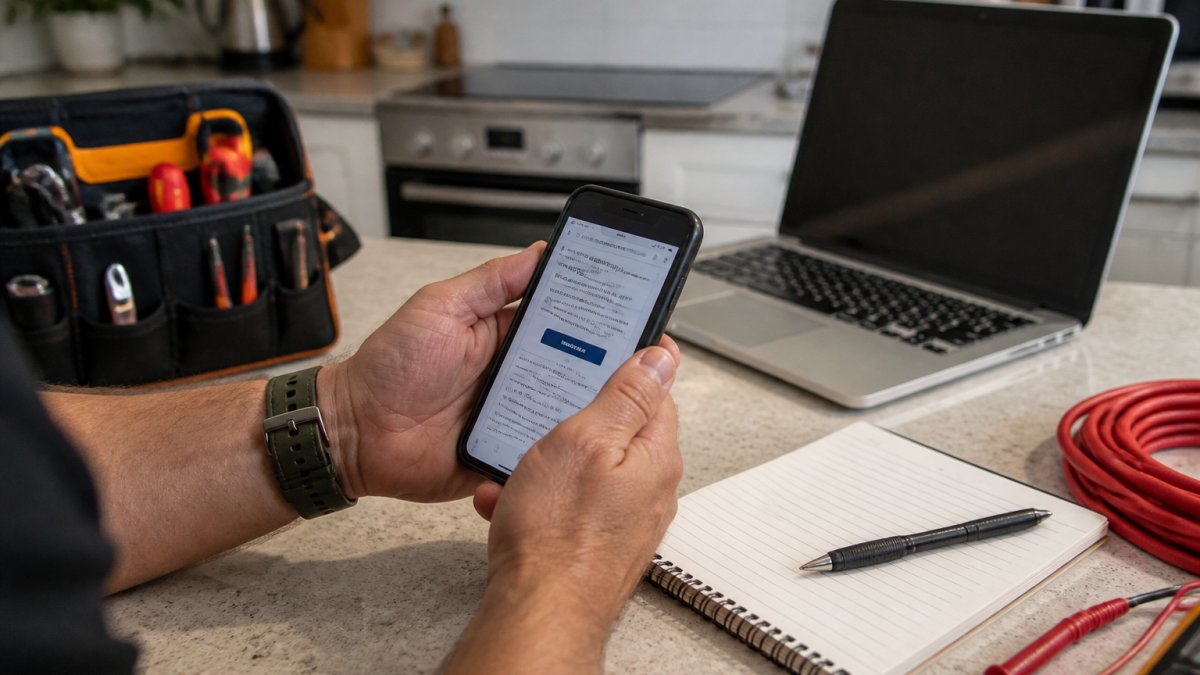
You can check an electrical contractor licence in minutes using the free public register run by your state's electrical safety regulator. In Queensland, that's the Electrical Safety Office. Search the business name or licence number, and the register shows whether it's current, expired or cancelled.
Here's how to run the check:
- Get the licence number, not just the business name
- Open the official regulator's online register
- Search by number or name
- Confirm the licence is current and covers the work you need
- Note the expiry date
Many appliance repairs involve electrical work, so the contractor must hold the right licence for that job. A handyman policy won't cover it.
Queensland Electrical Safety Office licensing register
Appliance Repair Technician Qualifications That Matter
Appliance repair technician qualifications matter because they prove the person has been trained and assessed, not just that they own a van and a multimeter. Look for three things: a current electrical licence, insurance cover, and genuine experience with your appliance type.
The licence is the non-negotiable one. It confirms the technician can legally carry out electrical work. Insurance matters too, because it protects you if something goes wrong on your property.
Experience is the third piece. A technician who works on fridges, ovens and washing machines every day will diagnose a fault faster than a generalist.
What most guides miss is that qualifications vary by appliance. A gas cooktop needs a different ticket to an electric oven. Ask what your specific job requires.
Questions to Ask an Appliance Repair Technician Before Booking
The right questions to ask an appliance repair technician before booking will separate a professional from a pretender in under a minute. Ask them directly, and listen carefully to the answers.
Run through this list:
- What's your licence number?
- Are you insured, and can you show proof?
- Do you use genuine spare parts?
- Is there a warranty on parts and labour?
- What's your call-out fee, and is it fixed?
- Can you give a written quote before starting?
A genuine technician answers all six without flinching. Vague answers, pressure to book now, or a refusal to put anything in writing are all signs to walk away.
We recommend getting the licence number in writing, even by text. It gives you a paper trail.
Your Appliance Repair Credentials Checklist
Use this appliance repair credentials checklist before you confirm any booking. It takes two minutes and covers everything that matters.
- Licence number provided and checked on the official register
- Licence is current and covers your appliance type
- Public liability insurance confirmed
- Genuine spare parts promised in writing
- Warranty offered on parts and labour
- Fixed call-out fee quoted upfront
- Written quote before work begins
- Business has a verifiable address and contact number
Work through it in order. If any box stays unticked, don't book.
This checklist is the fastest way to spot a problem before it costs you. Keep it handy for every repair, not just the first one.
| Check | Why It Matters | How to Confirm |
|---|---|---|
| Licence | Legal right to do the work | Regulator's online register |
| Insurance | Covers damage on your property | Ask for a certificate |
| Genuine parts | Repairs that last | Get it in writing |
| Warranty | Protects your money | Written terms |
| Fixed pricing | No surprise bills | Quote before work starts |
Red Flags That Signal an Unlicensed Technician
An unlicensed technician usually gives themselves away before they start work. The signs are consistent, and once you know them, they're hard to miss.
Watch for these:
- No licence number, or a refusal to share it
- Cash-only payment with no receipt
- Pressure to book immediately
- No fixed address or a mobile number only
- Quotes that change once they arrive
- No written warranty or paperwork
- Cheap parts offered as a "good deal"
The cash-only push is the biggest tell. It leaves no record, which is exactly the point. A licensed operator issues a proper invoice every time.
If you spot two or more of these signs, end the conversation. There are plenty of qualified technicians who will do the job properly.
What Happens If You Hire Unlicensed Appliance Technicians
Hiring unlicensed appliance technicians can void your insurance, endanger your household, and leave you with no legal comeback when the repair fails. The short-term saving rarely survives the first problem.
Here's what's actually at stake:
- Insurance risk. Insurers can refuse a claim if unqualified work caused the damage.
- Safety risk. Faulty electrical work can cause shocks or fires.
- No warranty. There's no comeback if the repair fails in a month.
- Repeat costs. Cheap parts fail early, so you pay twice.
- Legal limits. You have far fewer options against an unlicensed operator.
The maths is simple. A licensed repair costs a bit more upfront and far less over time. An unlicensed one does the opposite.
Conclusion
Verifying a technician takes two minutes, but skipping it can cost you far more than the repair itself. Check the licence, ask the right questions, and trust the red flags when they appear.
At ISB Electrical, our technicians are licensed, insured, and led by a qualified Electrical Engineer with over 30 years of experience. We use genuine spare parts backed by a warranty and offer same-day service.
Get started with ISB Electrical and book a repair you can trust. Call us now.
Frequently Asked Questions
How can I check whether an appliance technician is licensed?
Ask for their electrical contractor licence number and check it on your state's licensing register, such as the QBCC in Queensland or NSW Fair Trading in New South Wales. The register shows the licence status, expiry date and any conditions. If the number doesn't appear or the name doesn't match, don't book the job. You can also ask to see a physical or digital licence card before work starts.
Do appliance repair technicians need a licence?
Any appliance repair that involves 240-volt electrical work, such as ovens, cooktops, washing machines and fridges, must be done by a licensed electrician. In most states and territories, that means holding a current electrical licence issued by the relevant regulator. Some repairs, like replacing a door seal, may not need a licence, but if the job involves wiring, testing or opening the electrical compartment, a licence is required.
What qualifications should an appliance repair technician have?
Look for a current electrical licence. They should also hold public liability insurance. Manufacturer-specific training is a bonus because it shows familiarity with your brand.
Should an appliance repair technician have public liability insurance?
Yes. Public liability insurance covers damage to your property or injury on site. Ask for a certificate of currency and check the expiry date. If they can't produce one, you could be left covering repair costs if something goes wrong.