 Comparison
Alternatives to Replacing a Broken Fridge That Save Money
Last Updated: November 5, 2026
Quick Summary
The alternatives to replacing a broken fridge start with a proper diagnosis, since a failed fridge is often just a failed thermostat, fan motor or door seal. Repair usually costs far less than replacement, and interim options like an esky, a neighbour's fridge or a second-hand unit buy you time to decide.
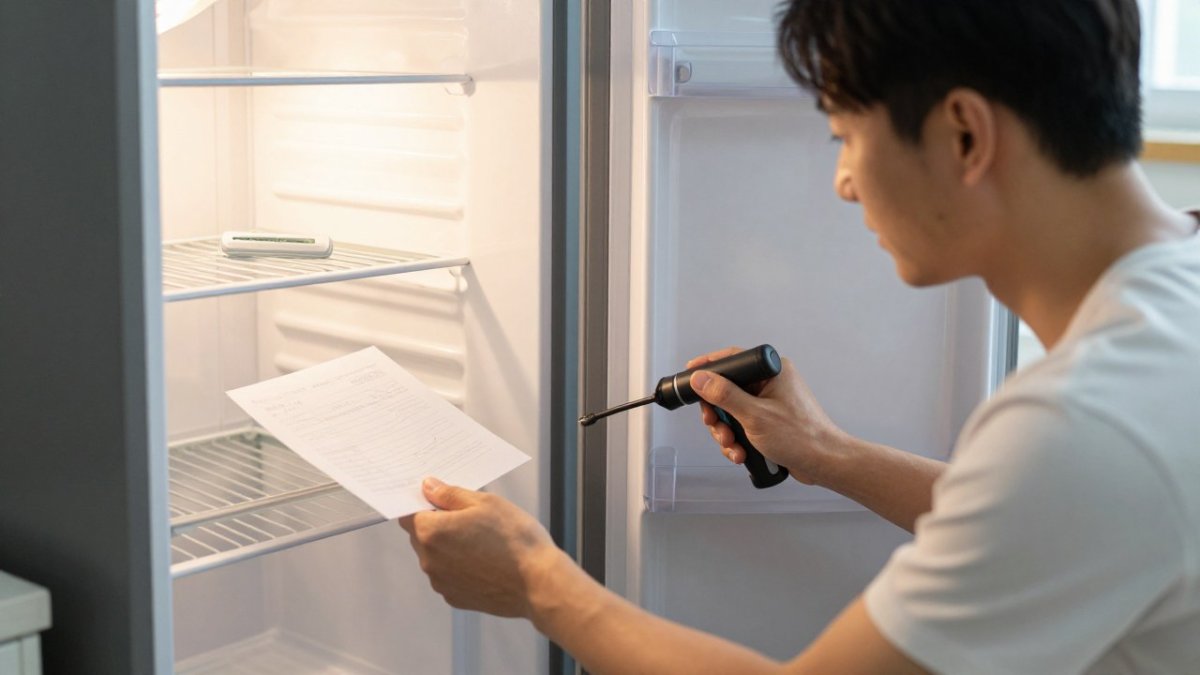
- Close the door on a sheet of paper; if it slides out easily, the gasket is failing.
- CHOICE reports Australian fridge repairs commonly fall between about $50 and $500.
- A closed fridge that has lost power holds safe temperatures for about four hours.
- Discard perishable food that has sat above 5°C for more than two hours.
- In most Australian residential tenancies, the landlord is responsible for appliances provided with the property.
Table of Contents
- Why a Broken Fridge Doesn't Always Mean a New One
- Fridge Not Cooling Troubleshooting: What You Can Check First
- Is It Worth Repairing a Fridge? The Honest Answer
- Fridge Repair Cost Versus Replacement Cost in Australia
- How Long Do Fridges Last and When Does Age Decide It
- Temporary Cooling and Short-Term Food Storage Options
- Second-Hand, Renting and Other Alternatives to Buying New
- Book a Same-Day Fridge Assessment Before You Buy
- Frequently Asked Questions
Why a Broken Fridge Doesn't Always Mean a New One
A broken fridge feels like an emergency, and the first quote you get often pushes you toward a new appliance. But a failed fridge is frequently a failed part, not a failed appliance. A fridge that looks finished is often one thermostat, one fan motor, or one door seal away from running properly again.
The alternatives to replacing a broken fridge start with a proper diagnosis. Seal and airflow faults are cheap to fix. Compressor and sealed-system faults are not. That single distinction decides most cases before money is discussed.
Below, we'll show you exactly how to triage the fault, compare repair against replacement honestly, and cover the interim options most guides skip entirely.
Fridge Not Cooling Troubleshooting: What You Can Check First
Start with the simplest checks before you call anyone, because a surprising share of "dead" fridges are airflow or seal problems. Work through these in order:
- Temperature setting: confirm the thermostat hasn't been knocked to a warm setting.
- Door seal: close the door on a sheet of paper. If it slides out easily, the gasket is failing.
- Condenser coils: pull the fridge out and check the coils at the back or base for dust and pet hair.
- Ventilation gap: leave the clearance the manufacturer specifies around the cabinet.
- Evaporator fan: listen for the fan running when the door is shut.
- Defrost system: heavy ice build-up on the rear wall points to a defrost fault.
Watch out: never pull or chip at ice inside the freezer with a knife. You can puncture the evaporator lines and turn a cheap defrost repair into a write-off.
If the fridge still won't hold temperature after these checks, the fault is likely electrical or sealed-system. That's when a fridge repair service for not-cooling faults becomes the sensible next call rather than a replacement.
Is It Worth Repairing a Fridge? The Honest Answer
A fridge is usually worth repairing when the fault is a single accessible part, the cabinet is in good condition, and the repair cost sits well below replacement. It is usually not worth repairing when the compressor or sealed system has failed on an older unit.
Here's the framework we use:
| Symptom or Factor | Repair Likely Worth It | Replacement Likely Better |
|---|---|---|
| Door seal, thermostat, fan motor | Yes, low-cost part | No |
| Defrost system fault | Yes, common and fixable | No |
| Compressor or gas leak | Depends on age | Usually yes |
| Age beyond typical lifespan | No | Yes |
| Rust, cracked liner, repeated failures | No | Yes |
The honest answer depends on the diagnosis, not the brand. A repairer who recommends replacement without testing the appliance isn't giving you a diagnosis. If you want the same decision logic applied to another appliance, our breakdown of whether to repair your oven or replace it follows the same method. For a budget-focused view of the whole question, see this guide to repairing major appliances on a budget.
Fridge Repair Cost Versus Replacement Cost in Australia
Repair cost is usually a fraction of replacement cost when the fault is a common part. CHOICE reports that Australian fridge repairs commonly fall somewhere between about $50 and $500 depending on the issue, while a new fridge means paying for the appliance, delivery, and removal of the old unit (CHOICE guide to repairing or replacing a fridge(https://www.choice.com.au/home-and-living/kitchen/fridges/articles/should-you-repair-or-replace-your-fridge)).
Repair pricing depends on the fault, the part, and access to it, so ask for a quote after diagnosis rather than a phone estimate. Replacement carries hidden costs too: the purchase price, delivery, installation, and disposal of the old fridge. For local repair pricing you can hold against a new-fridge quote, see what fridge repair costs on the Gold Coast.
How Long Do Fridges Last and When Does Age Decide It
Age matters most when a major component fails. An older fridge with a failed compressor often does not justify the repair bill, while a newer fridge with the same fault usually does.
Age also affects parts availability. Older models can mean long waits for spare parts, or none at all. Check the age, the fault, and the part before you decide. If two of those three are working against you, replacement starts to make sense.
Temporary Cooling and Short-Term Food Storage Options
You don't have to buy a new fridge the same day it fails. A failed fridge is a food-safety clock, not just an inconvenience, so the priority in the first few hours is keeping perishables out of the danger zone while you decide whether to repair or replace. The interim options below are ranked from cheapest and fastest to most involved.
- Esky or cooler with ice: the default first move. A well-insulated esky packed with block ice (not just cubed ice) will hold safe temperatures for roughly 12 to 24 hours if you keep the lid closed. Drain the meltwater and top up the ice before the interior climbs above 5°C.
- Neighbour's, family or friend's fridge: the cheapest option for a small volume of food, and the safest because it is already at temperature. Move the most perishable items first, raw meat, seafood, dairy, and prepared leftovers, and label anything you transfer so it comes back to you.
- Bar fridge or second-hand unit: covers the gap while a repair is booked, but check the seal and let it run for a few hours before loading it. A bar fridge is not a substitute for a full-size fridge if you have a family-sized shop to protect.
- Dry ice: the strongest option for freezer contents, but it is not a household toy. Handle it with insulated gloves, never seal it in an airtight container (it releases carbon dioxide as it sublimates), and keep it away from children and pets. Ventilate the room.
- Portable 12V fridge or car fridge: useful if you already own one for camping, but check its duty cycle and power draw before relying on it for more than a day.
Food safety is the part most guides skip. The safe limit for fridge contents is below 5°C; freezer contents should stay frozen solid. As a rule of thumb, a closed fridge that has lost power will hold safe temperatures for about four hours, and a full freezer for around 24 to 48 hours if the door stays shut, a half-full freezer is closer to 24 hours.
Watch out: do not keep opening the fridge door to check on things. Every opening dumps cold air and shortens the safe window; decide what you need, take it out in one go, and close the door.
Second-Hand, Renting and Other Alternatives to Buying New
Buying new isn't the only purchase route, and for a broken fridge the cheapest upfront option is rarely the cheapest over time. Compare each alternative on four axes: upfront cost, running cost, capacity, and what happens when it fails.
- Second-hand fridge: cheapest upfront, but you inherit its age and unknown history. Before you buy, check the door seal with the paper test, listen for the compressor cycling, ask its age and whether it has been repaired, and confirm it has been running (not sitting unplugged) so you can see it hold temperature. A second-hand unit with a failing seal can cost more in electricity than it saved on purchase.
- Renting or leasing: spreads cost and often includes servicing, but the total cost over a typical lease term usually exceeds buying outright, and you may be locked in. Read the exit terms before signing.
- Repair with genuine parts: restores the appliance you already know, and genuine parts backed by a warranty reduce repeat failures. This is usually the lowest total-cost route when the fault is a single accessible part.
- Mini-fridge or bar fridge as a stopgap: lower upfront cost and lower capacity, but running cost per litre of storage is usually higher than a full-size unit, so treat it as a bridge, not a permanent swap.
- Disposal and recycling: if you do replace, arrange proper removal. Refrigerants must be recovered by a licensed technician, not vented, and refrigerant-containing appliances should not be abandoned on a nature strip or dismantled casually.
For renters, the calculus is different again. In most Australian residential tenancies, the landlord is responsible for maintaining the premises and appliances provided with the property, so a failed fridge that came with the rental is generally the landlord's call, document the fault in writing (photos, dates, temperatures) and request repair in writing before you spend anything yourself. If you buy a replacement without agreement, you may not be reimbursed.
Watch out: a second-hand fridge sold 'as seen' gives you little recourse if it fails a week later, so test it running before you pay and get any age or repair history in writing.
Book a Same-Day Fridge Assessment Before You Buy
Before you spend on a new appliance, get the fault diagnosed properly. A prompt assessment tells you whether a repair is viable, what it involves, and what it costs, so you can compare it honestly against replacement.
ISB Electrical is a family-owned business led by a qualified Electrical Engineer with over 30 years of experience. We repair a range of appliance faults, using genuine spare parts backed by a warranty. Our licensed and insured technicians diagnose the fault before recommending a repair. If you're ready to book rather than buy, arrange fridge repairs in your area and get a straight answer on the appliance you already own.
Frequently Asked Questions
Is it worth repairing a broken fridge?
It usually is when the fault is a door seal, thermostat, fan motor or defrost system and the fridge is under about eight years old. A repair quote that comes in well under the price of a comparable new unit, combined with a genuine parts warranty, tips the decision toward repair. If the compressor has failed on an older, inefficient unit, replacement often makes more financial sense.
How much does it cost to repair a fridge?
Repair costs depend on the fault, the part, and access to it. Simple fixes like a door seal or thermostat sit at the low end, while compressor or sealed-system work climbs toward the top. Ask for a written quote before work starts so you can compare it with replacement. For current pricing, contact ISB Electrical through the website.
What should I do with food when my fridge stops working?
Keep the door closed as much as possible, because a full fridge holds temperature for several hours. Move high-risk items such as meat, dairy and leftovers into an esky with ice or a neighbour's fridge. Discard perishable food that has been above safe temperatures for an extended period, as food-safety guidance advises.
Can a broken fridge be repaired if it is not cooling?
Yes, in many cases. A fridge that runs but stays warm often has a failed evaporator fan, a blocked condenser coil, a faulty thermostat or a defrost system stuck on. These are faults a licensed technician can diagnose and assess. A fridge that is completely silent may have a compressor or control board issue, which is a bigger and more expensive repair.
How long do fridges last before replacement is the better option?
Fridge lifespan depends on maintenance and use. As a unit ages, repair costs can rise and parts availability can become a problem. At that point, compare the repair quote against the running costs of a newer, more efficient model, since older fridges often use noticeably more electricity.
Your fridge may not be finished yet. Get it assessed before you spend on a replacement, and let ISB Electrical give you a clear diagnosis, genuine parts, and same-day service so you can decide with facts rather than pressure. Call us now to book your assessment.