 Comparison
Genuine vs Non-Genuine Appliance Spare Parts Compared
Last Updated: November 4, 2026
Quick Summary
Genuine appliance spare parts are made to the manufacturer's specification for your specific appliance, while non-genuine parts are usually cheaper but can carry more fit, reliability and warranty risk. Genuine parts give more assurance of correct fit and traceability, which matters most for newer appliances and safety-critical components.
- Check the manufacturer part number against the model and serial number on your appliance's data plate.
- Ask sellers whether a part is genuine, OEM or aftermarket, and request returns and warranty terms in writing.
- Non-genuine parts can perform well at first but may fail earlier or stress neighbouring components.
- Using non-genuine parts can complicate a manufacturer warranty claim, so check the terms before buying.
- Judge value by appliance age, part cost and how disruptive another breakdown would be.
Table of Contents
- What Genuine, OEM, Aftermarket and Generic Parts Actually Mean
- Genuine vs Aftermarket Appliance Parts: The Real Differences
- OEM Appliance Parts and Why Fit Matters
- Performance, Durability and the Risk of Repeat Breakdowns
- Price, Value for Money and Total Cost of Ownership
- How to Identify Genuine Appliance Parts Before You Buy
- Appliance Spare Parts Warranty and Your Consumer Rights
- Booking Your Next Repair With Parts You Can Trust
- Frequently Asked Questions
Choosing between genuine and non-genuine appliance spare parts is one of the most common decisions Australian homeowners face when a dishwasher, oven or fridge stops working. At ISB Electrical, a family-owned Gold Coast business led by a qualified Electrical Engineer, we regularly help homeowners with this choice. The short answer is that genuine parts are made to the manufacturer's specification for your appliance, while non-genuine parts can be cheaper but may carry more fit and reliability risk. Below, we explain the difference, what it means for performance and cost, and how to protect yourself before you buy.
What Genuine, OEM, Aftermarket and Generic Parts Actually Mean
The words on a parts listing are not regulated in the same way as the appliance itself, so the same component can be described as 'genuine', 'OEM', 'aftermarket' or 'compatible' depending on who is selling it.
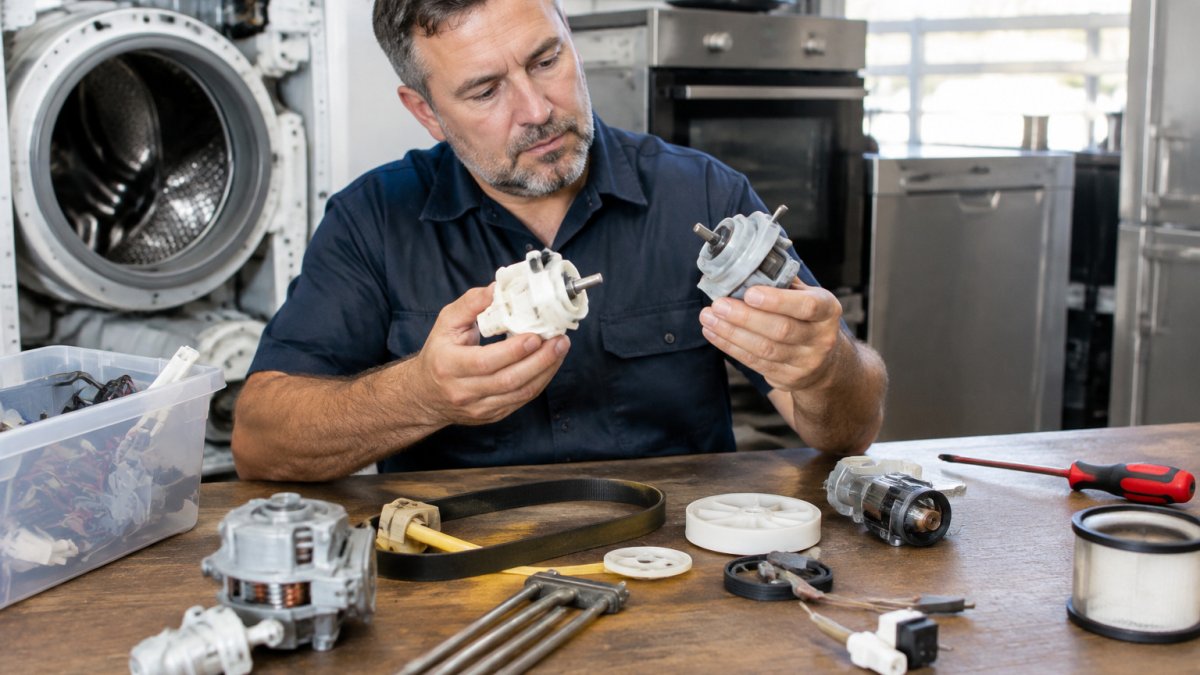
Genuine (or original) parts are made by, or under licence for, the appliance manufacturer and are sold in the manufacturer's packaging with a manufacturer part number. They are the same specification as the component that failed.
OEM parts are made by the original equipment manufacturer, often a third-party supplier that builds the component for the appliance brand, to the manufacturer's design and specification. In practice an OEM part and a genuine part are frequently the same item; the difference is usually the packaging and the distribution channel.
Aftermarket parts are made by independent companies to fit one or more appliance models. Quality ranges widely. A reputable aftermarket supplier will publish the models the part fits, the materials used and a warranty period; a poor one will list a generic photo and a price.
Generic parts are unbranded alternatives sold mainly on price, often through marketplaces with limited product information. There is usually no meaningful compatibility list, no batch traceability and no clear warranty path. For cosmetic items such as knobs or drip trays this may be acceptable; for anything that carries current, gas, heat or water, the lack of documentation is a genuine risk.
Counterfeit parts are the category to avoid outright. These imitate a brand's packaging, logos or part numbers without meeting the manufacturer's specification. They are not simply 'cheap aftermarket', they are misrepresented goods.
A practical way to keep the categories straight is to ask the seller three questions before ordering: what is the manufacturer part number, which appliance models and serial ranges does it fit, and what is the returns and warranty position if it does not fit. A seller who can answer all three is usually selling a traceable part; a seller who cannot is asking you to take the risk.
Watch out: 'Genuine' on a marketplace listing is a seller's description. Check the part number against your appliance's data plate rather than relying on the word in the title.
Genuine vs Aftermarket Appliance Parts: The Real Differences
The biggest difference is often fit. A genuine part is made to the manufacturer's specification for your appliance. An aftermarket part may look identical but can differ in fit or electrical rating.
Most homeowners will not notice the gap on day one. The problems tend to appear later, as a part wears unevenly, runs hotter or fails under load. That is why a cheap aftermarket valve or control board can end up costing more than the genuine part it replaced.
Aftermarket parts are not always poor quality. Some are well made and perform well on older appliances. The risk lies in not knowing which category you are buying.
OEM Appliance Parts and Why Fit Matters
OEM parts sit between genuine and generic. They are built to the original specification, so fit and performance should match, even though the packaging may not carry the manufacturer's name. For many repairs, a verified OEM part gives the same result as a genuine one at a lower price.
Fit matters most for components that control safety or timing. A misfitting door seal on a fridge can let warm air in and drive the compressor to run constantly. A mismatched heating element in an oven can produce uneven cooking or overheat the cavity.
Performance, Durability and the Risk of Repeat Breakdowns
Durability is often where genuine parts justify their price, since components made to the appliance's specification can perform more consistently over time. Non-genuine parts can perform well at first, then fail earlier or put stress on neighbouring components.
Repeat breakdowns are the hidden cost. If a non-genuine part fails within months, you pay for a second repair, a second callout and more downtime. Many homeowners discover this only after the appliance has broken down again.
Warranty considerations also matter here. Using non-genuine parts can complicate a manufacturer warranty claim, so check the terms before you buy.
Price, Value for Money and Total Cost of Ownership
Non-genuine parts usually cost less at the point of purchase. The real comparison is total cost of ownership: the part price, the labour, the callout fee and the likelihood of a repeat repair over the appliance's remaining life.
A simple way to judge value is to ask three questions. How old is the appliance? How expensive is the failed component? And how disruptive would another breakdown be? For an older appliance with a low-value part, a non-genuine option may be reasonable. For a newer appliance or a high-value component, genuine parts usually make more financial sense.
Pricing depends on the part, the model, quantity and delivery. For current prices and a quote for your specific appliance, contact ISB Electrical directly through our website. If you are weighing up repair against replacement, our guide covers the total cost of each option.
The table below compares the two main options on the points that matter most when deciding between them.
| Factor | Genuine parts | Non-genuine parts |
|---|---|---|
| Cost at purchase | Usually higher | Usually lower |
| Fit and specification | Made to manufacturer specification | Fit and electrical rating can differ |
| Durability | Performs more consistently over time | Can fail earlier or stress other parts |
| Warranty impact | Keeps manufacturer warranty intact | May complicate a manufacturer warranty claim |
| Best fit | Newer appliances or high-value components | Older appliances with low-value parts |
How to Identify Genuine Appliance Parts Before You Buy
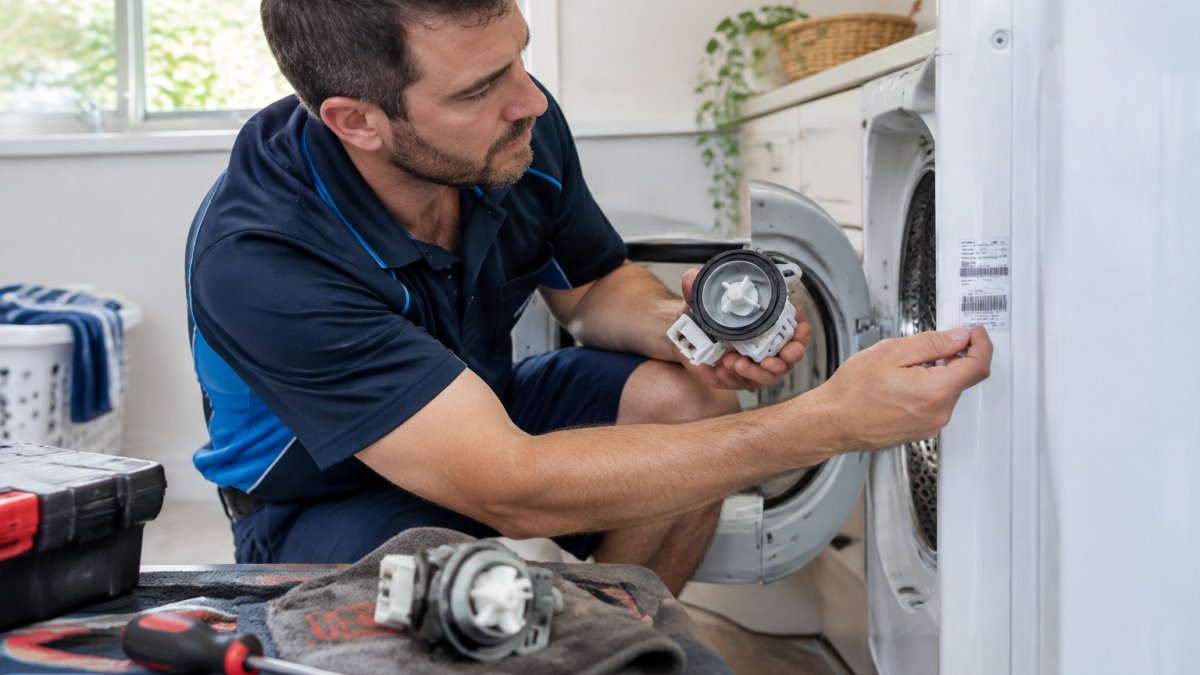
Start with the model number on your appliance's data plate, then match it to the part number supplied by the seller. A reputable supplier should confirm compatibility before you order.
Check the packaging and labelling for the manufacturer's branding, a clear part number and a traceable batch code. Be cautious of unusually low prices, vague product descriptions and sellers who cannot confirm where the part was made.
Ask whether the part is genuine, OEM or aftermarket, and request the supplier's returns and warranty terms in writing. A legitimate seller will answer these questions without hesitation.
Appliance Spare Parts Warranty and Your Consumer Rights
Warranty and consumer rights are often spoken about as if they were the same thing. They are not, and the distinction matters when a repair involves a non-genuine part.
A manufacturer warranty is a contractual promise from the appliance maker. Its terms are set by the manufacturer, and they commonly state that the warranty may be affected if the appliance is repaired with parts the manufacturer has not approved, or if damage is caused by a non-genuine component.
Those consumer guarantees are statutory. They sit in the Australian Consumer Law, which is Schedule 2 of the Competition and Consumer Act 2010 and is enforced by the Australian Competition and Consumer Commission (ACCC) alongside state and territory fair trading agencies. The guarantees include that goods are of acceptable quality, fit for purpose and match their description, and that services are supplied with due care and skill.
Where the two interact, the practical questions are: did the part cause the failure, and who supplied and fitted it? If a non-genuine part fails and damages the appliance, the manufacturer may decline a warranty claim on the basis that the damage was caused by an unapproved part, while your remedy against the part supplier or the repairer sits under the consumer guarantees and any parts warranty they offered. Keeping the paperwork is what makes either path workable.
Before you accept a repair, ask the repairer four things in writing: whether the part is genuine, OEM or aftermarket; whether the part carries its own warranty and for how long; who is responsible if the part fails; and whether fitting it affects the appliance manufacturer's warranty. A repairer who uses genuine parts should be able to state the manufacturer part number on the invoice.
Keep a simple repair file: the invoice showing the part number and description, the appliance model and serial number, the date of repair, any parts warranty documentation, and photographs of the failed component if available.
Watch out: a manufacturer warranty and your consumer guarantees can point to different remedies. Do not assume that because a manufacturer declines a claim, you have no recourse, and do not assume a parts warranty replaces your statutory rights.
Booking Your Next Repair With Parts You Can Trust
If your appliance has stopped working, a quick diagnosis is the first step. A qualified technician can confirm the fault, check whether the part is worth repairing and explain your options before any work begins. Our practical guide to avoiding poor repairs explains what to look for when choosing a technician.
ISB Electrical offers same-day service across the Gold Coast for washing machines, dishwashers, fridges, ovens, cooktops and dryers. Read about whether licensed electrical appliance repairers are worth engaging for parts-related work. Our licensed and insured technicians use genuine spare parts and provide a warranty on the parts we fit. Owners of a Fisher & Paykel appliance can book a Fisher & Paykel repair on the Gold Coast for brand-specific service using correct parts. Call us now to book a visit or request a quote.
Frequently Asked Questions
What is the difference between genuine and non-genuine appliance spare parts?
Genuine appliance spare parts are made by or for the original appliance manufacturer and are designed to match the exact specification of your model. Non-genuine parts include aftermarket and generic alternatives made by third parties. They may work well, but fit, materials and tolerances can vary. Check the part number against your appliance model number, ask for the manufacturer's details, and confirm whether the supplier offers a warranty on the part before you commit.
Are aftermarket appliance parts as good as genuine parts?
Some aftermarket appliance parts perform adequately, but quality varies widely between manufacturers. Genuine parts are made to the original specification, which can mean more consistent performance and may reduce the risk of repeat failure. Aftermarket parts can be a reasonable choice for simple, low-stress components, but for electronic control boards, motors and seals, genuine parts are generally the safer option.
Do non-genuine parts affect an appliance warranty?
They can. Some manufacturers state that using non-genuine parts may affect warranty cover, particularly where a non-genuine part is linked to a fault. Under Australian Consumer Law, a consumer guarantee covers the replacement part itself, and a repairer's warranty on workmanship and parts is separate from the manufacturer's warranty. Ask your repairer to put the warranty terms for each part in writing before the work begins.
Who should fit replacement appliance parts?
A qualified, licensed technician should fit replacement parts on mains-connected appliances, especially ovens, cooktops, dryers and any work involving gas or live electrical components. Incorrect installation can cause leaks, overheating or electrical faults even when the part itself is genuine. ISB Electrical's licensed technicians can diagnose the fault, supply genuine parts and carry out the repair. Contact ISB Electrical directly for current pricing and availability.