 Ultimate guide
Are Licensed Electrical Appliance Repairers Worth It?
Last Updated: November 3, 2026
Quick Summary
Licensed electrical appliance repairers are worth the premium when a fault involves wiring, gas, or safety-critical components. A licence shows the person has been assessed against the standards governing electrical work in your state or territory. Confirm the licence on the public register before any repair starts.
- Check the licence number on your state or territory electrical regulator's public register, not just the business name.
- Confirm the licence class matches the appliance, and get a separate gas fitting licence for gas components.
- Ask for a current certificate of currency for public liability insurance, since a licence is not insurance.
- Unlicensed repairs can void a manufacturer's warranty and leave you with no recourse if the work fails.
- Compare quotes for excluded parts and written warranty terms, since a low headline price can cost more.
Table of Contents
- Why Licensing Matters for Electrical Appliance Repairs
- How to Verify an Electrical Appliance Repairer's Licence
- Electrical Safety and Legal Requirements for Appliance Repairs
- Appliance Repair Call-Out Fees and How to Compare Quotes
- How Long Does Dishwasher Repair Take?
- When to Repair vs Replace Household Appliances
- Warranties, Genuine Parts and Your Consumer Rights
- Booking a Licensed Repair With ISB Electrical
- Frequently Asked Questions
Why Licensing Matters for Electrical Appliance Repairs
Licensed electrical appliance repairers are worth the premium when a fault involves wiring, gas, or safety-critical components. For a full walkthrough, read how to verify licensed appliance technicians.
Unlicensed repairs can void a manufacturer's warranty, create liability if a fault later causes a fire or shock, and leave you with no recourse if the work fails. Many homeowners only discover this after the second breakdown, when the first repair has already been paid for.
Licensed electrical appliance repairers carry the training and insurance to stand behind their work. That accountability is a common reason they can cost more per hour than a handyman, and it is why they are often the better value on anything involving power.
How to Verify an Electrical Appliance Repairer's Licence
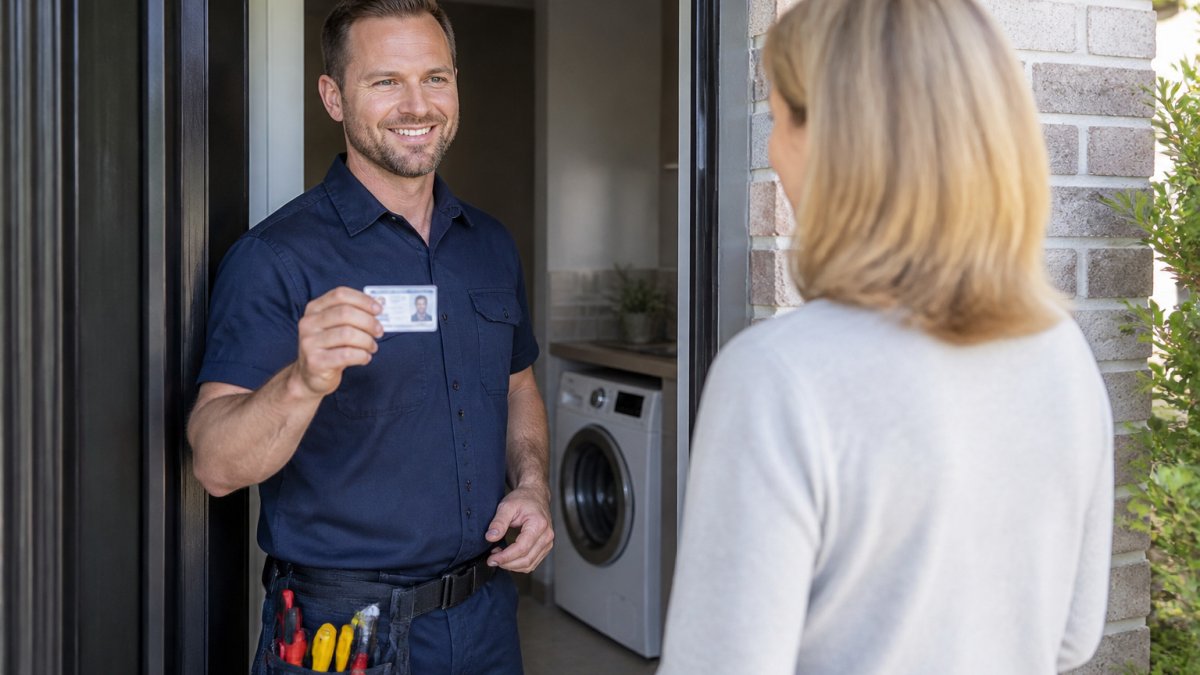
Many pages on this topic simply list repair services or directories, and few explain how to confirm that the person arriving at your door is licensed. That verification step is the whole point of hiring a licensed repairer, so here is the practical process.
Know which licence type applies
Electrical work in Australia is licensed at state and territory level, and the licence class matters. A repairer who works on the internal wiring of an appliance typically needs an electrical contractor licence or an electrical worker licence (the exact names differ by jurisdiction) issued by the state or territory electrical regulator. In some states, a separate restricted electrical licence covers specific appliance classes only. If the repair involves gas components, for example a gas oven or a gas-boosted hot water appliance, a separate gas fitting licence is also required.
Ask the business which licence class their technician holds and whether it covers the appliance type you need repaired. If you are still looking for someone, see how to find a licensed appliance repairer in Australia. A licence that covers domestic wiring does not automatically cover all appliance categories.
Check the public register
Every state and territory electrical regulator maintains a public licence register. Find the regulator for your state or territory and search its register.
Search using the licence number, not just the business name. Confirm four things: the licence is current, the licence class matches the work, the name on the licence matches the technician or business attending, and there are no conditions or suspensions recorded.
Watch out: a business name appearing on a quote does not mean the individual technician is licensed, check the person, not just the company.
Ask about insurance separately
A licence is not the same as insurance. Ask for the business's public liability insurance certificate of currency and confirm the policy is current. If the technician is a sole trader, ask whether they hold personal injury cover as well. A licensed but uninsured repairer can still leave you exposed if something goes wrong on your property.
Keep a record
Record the licence number, the register you checked it against, the date you checked, and the insurance details. If a warranty claim, insurance claim, or dispute follows, this record is the difference between a straightforward resolution and a difficult one. It also lets you re-check the licence if the same business returns months later.
Electrical Safety and Legal Requirements for Appliance Repairs
Electrical work on appliances is regulated because faults can cause fires, electric shock, and carbon monoxide exposure in the case of gas units. Repairs that alter the wiring, earthing, or safety switches must be carried out by someone licensed to do so.
In practice, this means a repairer should isolate the appliance, test for residual voltage, and confirm earthing before touching internal components. Work that skips these steps is a safety risk regardless of how quickly it is completed.
You are also entitled to a written record of what was done. Keep invoices and any compliance certificates, since they matter if the appliance is later involved in an insurance claim.
Appliance Repair Call-Out Fees and How to Compare Quotes
Most repairers charge a call-out fee for attending, often credited against the final repair cost if you proceed. Pricing depends on the appliance, the fault, parts required, and your suburb, so there is no single figure that applies across the board.
When comparing quotes, check whether the call-out fee is included, whether parts are quoted separately, and whether the warranty on labour and parts is stated in writing. A low headline price with excluded parts and no warranty is often the more expensive option.
For current pricing and a quote specific to your appliance, contact ISB Electrical directly. We would rather give you an accurate figure after a proper diagnosis than guess at a number that does not reflect your fault.
Call-out fees and quote details vary, so this summary lists what to check when comparing quotes.
| Quote item | What to check | Why it matters |
|---|---|---|
| Call-out fee | Included or excluded | Often credited against the repair cost |
| Parts | Quoted separately or included | Excluded parts can make a low price misleading |
| Warranty | Stated in writing | A low price with no warranty may cost more |
How Long Does Dishwasher Repair Take?
Dishwasher repair time depends on the fault and whether the required part is on hand. Some common faults may be resolved within the same appointment once the part is available.
Delays usually come from parts availability rather than the repair itself. Ask the technician whether they carry common components for your model or whether a special order will be needed, since this determines how long your dishwasher stays out of action.
When to Repair vs Replace Household Appliances
A single rule of thumb is a common shortcut for this decision. A more useful decision uses five factors together: appliance age, repair estimate, parts availability, warranty position, and running cost. Work through them in order.
1. Appliance age against expected service life
Compare the appliance's age with its typical service life. As a general guide, appliance service life varies with use and maintenance, so check the manufacturer's stated expectations for your model. If the appliance is already past its expected life, a repair buys time but rarely value.
2. Repair estimate as a share of replacement cost
Get a written repair quote that separates the call-out fee, labour, and parts. Compare the total against the price of a comparable new unit. Many people use a rule of thumb that repairs costing a large share of the replacement price on an older appliance are hard to justify. On a young appliance, a higher repair share can still be justified because you are protecting remaining service life.
3. Parts availability and lead time
Ask whether the required part is in stock, available locally, or a special order. A repair that depends on a part with a long lead time may leave you without the appliance for longer than expected. If the part is discontinued or only available as a used component, replacement becomes more attractive regardless of price.
4. Warranty position
Check whether the appliance is still under manufacturer warranty. If it is, an unauthorised repair can void the remaining cover, contact the manufacturer or their authorised service agent first. If the appliance is out of warranty, ask what workmanship guarantee and parts warranty the repairer provides, and for how long. A repair backed by a 12-month workmanship guarantee is worth more than a cheaper repair with no written guarantee.
5. Running cost and efficiency
An older appliance that is expensive to run can make replacement pay back over time even when the repair itself is affordable. Compare the energy rating of a new unit with your current model, and factor in likely annual running cost savings over the years you expect to keep the new appliance.
A simple decision sequence
- Is the appliance still under manufacturer warranty? If yes, use an authorised repairer.
- Is the required part available within a reasonable time? If no, lean toward replacement.
- Is the repair estimate more than half the replacement price on an appliance past its expected life? If yes, lean toward replacement.
- Does the repair come with a written workmanship and parts guarantee? If no, get a second quote.
- Will a new appliance save enough on running costs to offset the price difference? If yes, replacement is the stronger choice.
Watch out: a cheap repair on an appliance that is already failing in multiple ways often leads to a second breakdown within months, ask the technician whether they found other components near end of life before you commit.
Warranties, Genuine Parts and Your Consumer Rights
Genuine parts matter because substitutes can fail sooner or affect how the appliance performs. Ask whether any repairer you consider uses genuine components and whether the spare parts they fit carry a warranty.
Under Australian consumer law, services must be carried out with due care and skill, and goods should be of acceptable quality. Keep your invoice and warranty documentation so you can check your rights if a repair fails.
Booking a Licensed Repair With ISB Electrical
ISB Electrical is a family-owned business led by a qualified Electrical Engineer with over 30 years of experience. We repair washing machines, dishwashers, fridges, ovens, cooktops, and dryers, using genuine spare parts backed by a warranty, with same-day service available. If your dishwasher needs attention, see our Euro Appliances dishwasher repairs on the Gold Coast.
Our technicians are licensed and fully insured. To check availability and get a quote for your appliance, call ISB Electrical today and we will arrange a diagnosis. For ovens and cooktops, see our oven and cooktop repairs in Molendinar.
Frequently Asked Questions
How much is a Miele call-out fee?
Call-out fees for Miele appliances vary by provider, by the type of appliance and by where the job is. ISB Electrical does not publish a fixed figure here, because the cost depends on the appliance, the fault and the service area. The most reliable way to compare is to ask each repairer for a written quote that states whether the call-out fee is included in the repair price or charged separately. Ask too whether the fee is credited if you go ahead with the repair. For a current quote on a Miele or any other brand, contact ISB Electrical directly.
What qualifications do I need to repair appliances?
Electrical appliance repair work generally requires a licensed electrical worker in Queensland, because it involves mains electricity, wiring and safety switches. Licences are issued by the relevant state or territory electrical regulator. Trade qualifications such as a certificate in electrotechnology or an electrical engineering background are also common. You can check any licence status through your state or territory electrical regulator's public register before a technician starts work.
Does my appliance warranty remain valid if I use an independent repairer?
In many cases a warranty can be affected by repairs carried out by someone other than the manufacturer's authorised service provider, so read your warranty terms before booking. Under Australian consumer law, goods are expected to be of acceptable quality, and this is not dependent on who carried out a repair. A licensed repairer who uses genuine spare parts and keeps written records of the work is in a stronger position to help you if a dispute arises. ISB Electrical uses genuine spare parts and backs them with a warranty.
Why is it important to use a licensed electrical repairer for appliances?
A licensed repairer is trained to work safely on appliances that connect to mains power, which reduces the risk of electric shock, fire and damage to your home wiring. Licensing also gives you a clearer route to complaints and compensation if the work is faulty. Unlicensed repairs may create difficulties if you need to make an insurance or warranty claim. ISB Electrical's technicians are licensed and insured, and the team is led by a qualified Electrical Engineer with more than 30 years of experience.